Summer Villa and the McKay-Salmon House

Why it's listed
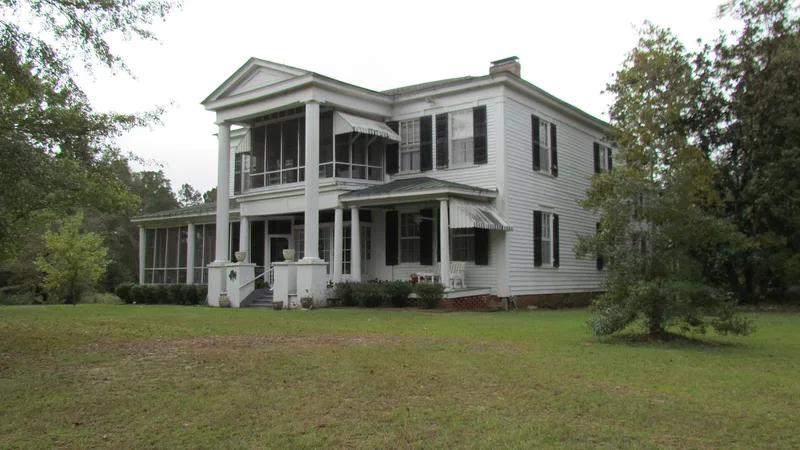
West of Lillington, in the Sandhills community of Summerville, a small complex of buildings preserves the setting of a 19th century plantation. Summer Villa, begun in 1849 by Reverend Neill McKay, is a two-story frame house that began as Greek Revival and was updated early in the 20th century with a wraparound porch and a pedimented portico in the Neo-Classical Revival style. Behind it stand outbuildings from the mid 19th to the mid 20th century, including a carriage house of about 1850. Across the road is the McKay-Salmon House, a one-story cottage built late in the century for McKay's daughter and decorated with turned and sawn woodwork. McKay was a Presbyterian minister, church historian and university trustee who also held the most enslaved people in Harnett County in 1860, with income drawn largely from turpentine and lumber. The property was listed for its architecture, its link to McKay and the naval stores economy, and its archaeological potential.
Machine-generated summary. This summary was generated by a language model from the official nomination document and has not been reviewed line by line by an editor. It may contain errors. Check the source document before relying on any detail. Source: nomination document (PDF) · catalog entry. Generated October 2026 (model claude-sonnet-5-5, prompt v1.0-2026-10-29).
| Period of significance | 1800-1899 |
|---|---|
| Styles | Greek Revival updated in early 20th century Neo-Classical Revival (Summer Villa); late 19th century decorated cottage (McKay-Salmon House) |
| Areas of significance | Historic - Non-Aboriginal, Architecture |
| Acreage | 45 |
| Boundary source | NPS cultural-resource GIS polygon |
| Full listing page | Summer Villa and the McKay-Salmon House (property record) |
What listing means for this property
This is a historic district. Buildings within its boundary are either contributing (they add to the district's significance) or non-contributing. Owners of contributing income-producing buildings can claim the 20% federal rehabilitation tax credit; homeowners should look at state credits. National Register districts impose no design review by themselves; a local historic district ordinance, if one exists, does (the difference explained).
General information, not legal or tax advice. Rules change; confirm with your State Historic Preservation Office or a qualified adviser.