Steele Creek Presbyterian Church and Cemetery

Why it's listed
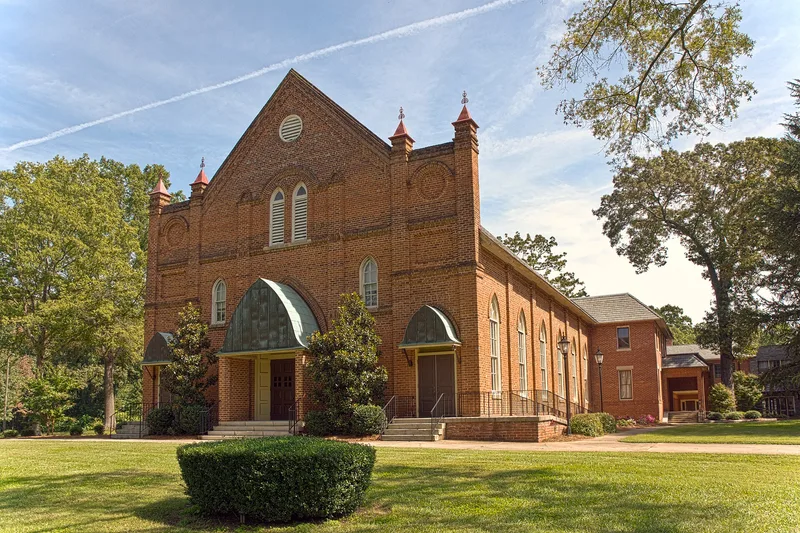
Brick Gothic Revival church and historic cemetery on a tree-shaded rise above Steele Creek Road, southwest of Charlotte in Mecklenburg County, North Carolina. The sanctuary was completed in 1889 after the congregation's previous brick-less church burned in January 1888; members made the bricks, and H. J. Norris served as contractor. Its pointed-arched windows, crenellated entry towers and steep parapeted gable express the style, and it was regarded as the finest church architecture in rural Mecklenburg when built. The adjoining cemetery holds about 1,700 headstones dating from 1763, including roughly 200 from before about 1820. Many were carved by the Bigham family, whose workshop operated nearby, and the designs include the Scottish thistle, tree of life and family coats of arms. The church, founded by Scotch-Irish settlers, was one of the first seven congregations established in the county, which underlies its significance in early settlement history.
Machine-generated summary. This summary was generated by a language model from the official nomination document and has not been reviewed line by line by an editor. It may contain errors. Check the source document before relying on any detail. Source: nomination document (PDF) · catalog entry. Generated October 2026 (model claude-haiku-5-5, prompt v1.1-2026-10-29).
| Period of significance | 1763-ca. 1820, 1889 |
|---|---|
| Styles | Gothic Revival |
| Areas of significance | Art, Exploration/Settlement, Architecture |
| Acreage | 17 |
| Boundary source | NPS cultural-resource GIS polygon |
| Full listing page | Steele Creek Presbyterian Church and Cemetery (property record) |
What listing means for this property
This is a historic district. Buildings within its boundary are either contributing (they add to the district's significance) or non-contributing. Owners of contributing income-producing buildings can claim the 20% federal rehabilitation tax credit; homeowners should look at state credits. National Register districts impose no design review by themselves; a local historic district ordinance, if one exists, does (the difference explained).
General information, not legal or tax advice. Rules change; confirm with your State Historic Preservation Office or a qualified adviser.