Spears House

Why it's listed
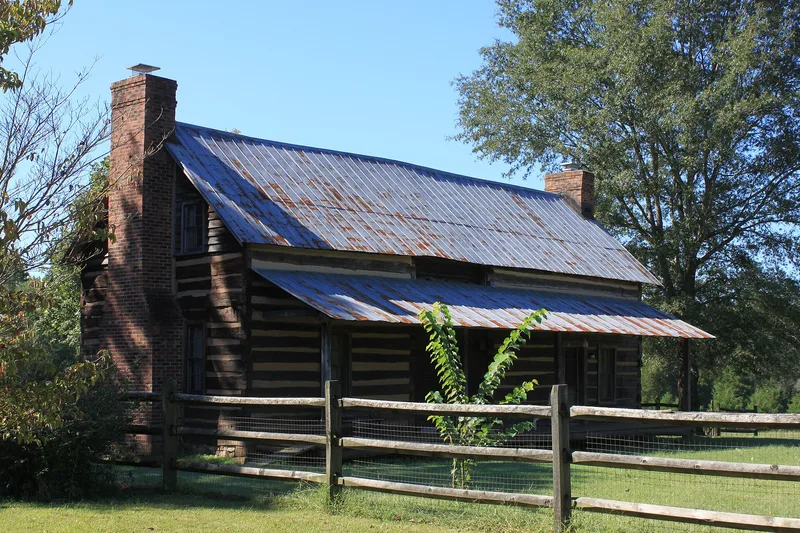
This log dogtrot house sits on its original site beside Caldwell Creek in rural Cabarrus County. It grew in stages. A one-room log pen, probably built between about 1760 and 1795, was joined to a larger, finely hewn second pen built around 1796 to 1800, probably by William Wallace Spears. The two were united as a dogtrot by the first quarter of the 19th century. A frame rear ell was added near the middle of the century, and part of it was later lost to a fallen tree. The house was vacated in 1961, then restored between 1982 and 1987 to its dogtrot form, using hand-hewn replacement logs cut on the farm. It is considered locally significant for architecture. The first pen is probably among the oldest surviving buildings in the county, and the house is the county's only remaining log dogtrot. Its half-dovetail notching and pen proportions reflect Scotch-Irish building traditions. The property is also linked to the Caldwell, Spears and Pharr families of the Rocky River community.
Machine-generated summary. This summary was generated by a language model from the official nomination document and has not been reviewed line by line by an editor. It may contain errors. Check the source document before relying on any detail. Source: nomination document (PDF) · catalog entry. Generated October 2026 (model claude-sonnet-5-5, prompt v1.0-2026-10-29).
| Period of significance | 1st quarter 19th century |
|---|---|
| Styles | Half-dovetail log dogtrot |
| Areas of significance | Architecture |
| Acreage | 38.5 |
| Boundary source | NPS cultural-resource GIS polygon |
| Full listing page | Spears House (property record) |
What listing means for this property
This is a historic district. Buildings within its boundary are either contributing (they add to the district's significance) or non-contributing. Owners of contributing income-producing buildings can claim the 20% federal rehabilitation tax credit; homeowners should look at state credits. National Register districts impose no design review by themselves; a local historic district ordinance, if one exists, does (the difference explained).
General information, not legal or tax advice. Rules change; confirm with your State Historic Preservation Office or a qualified adviser.