South Main Street Historic District

Why it's listed
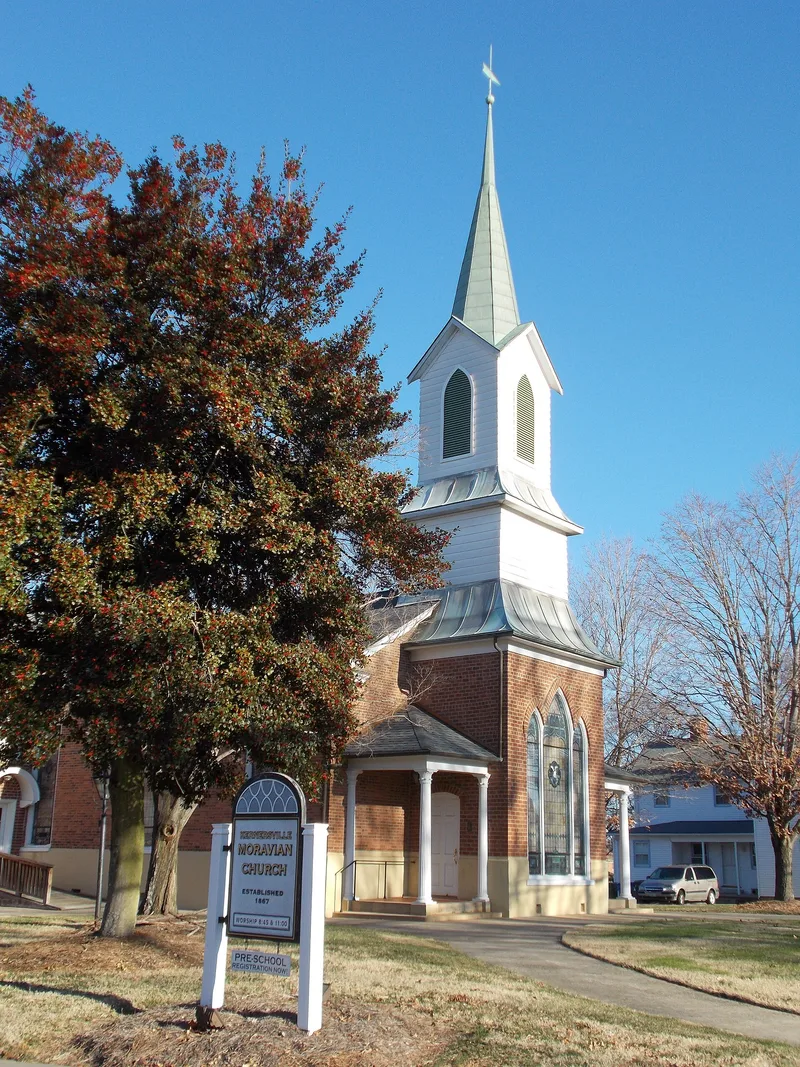
Six blocks of South Main Street in Kernersville, once the stage road to Salem, make up this district of roughly 45 acres. Houses, shops, two churches and a small park sit among mature street trees. The oldest house, the Spears House, dates to about 1834. Many 1850s and 1870s brick homes were built by members of the Kerner family, who developed land that once belonged to Joseph Kerner. Frame cottages with elaborate sawn and turned woodwork, late Victorian houses, and early twentieth century Colonial Revival and bungalow dwellings follow. Commercial buildings include the 1884 Greenfield and Kerner Tobacco Factory and the ornate brickwork of the 1903 Bank of Kernersville. Korner's Folly, an 1880 showcase house with 22 rooms, is already separately listed. Of 84 additional resources, 57 contribute to the district's character. Twenty-one buildings predate 1900, which underlines its value as a record of the town's growth and architecture.
Machine-generated summary. This summary was generated by a language model from the official nomination document and has not been reviewed line by line by an editor. It may contain errors. Check the source document before relying on any detail. Source: nomination document (PDF) · catalog entry. Generated October 2026 (model claude-sonnet-5-5, prompt v1.0-2026-10-29).
| Styles | Mid-19th Century; Late Victorian; Late 19th and 20th Century Revivals |
|---|---|
| Areas of significance | Industry, Commerce, Exploration/Settlement, Architecture |
| Acreage | 45 |
| Boundary source | NPS cultural-resource GIS polygon |
| Full listing page | South Main Street Historic District (property record) |
What listing means for this property
This is a historic district. Buildings within its boundary are either contributing (they add to the district's significance) or non-contributing. Owners of contributing income-producing buildings can claim the 20% federal rehabilitation tax credit; homeowners should look at state credits. National Register districts impose no design review by themselves; a local historic district ordinance, if one exists, does (the difference explained).
General information, not legal or tax advice. Rules change; confirm with your State Historic Preservation Office or a qualified adviser.