South Broad Street Row

The National Park Service has not published a boundary polygon for this district; the map shows the listed properties inside it and the district's reference point.
Why it's listed
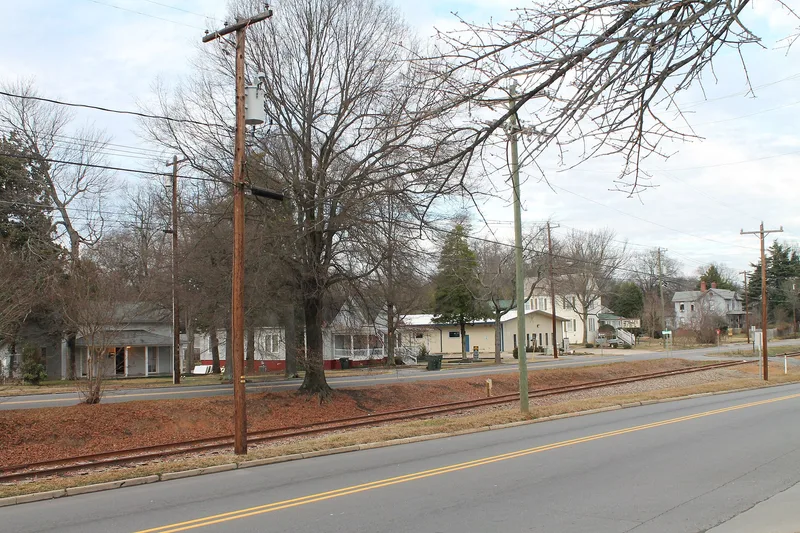
Six late Victorian frame houses line South Broad Street in Mooresville, just south of the commercial district and beside the railroad tracks. They are the last intact part of a larger group of early residences that once stood on both sides of the line. Built between about 1885 and 1914, the one- and two-story dwellings share ornamented porches, brackets, kingpost gables and segmental or pointed-arch window and door surrounds. The row includes a former Presbyterian manse from 1891 and houses tied to a physician, a pharmacist, a department store owner, a cotton seed oil mill manager who later served as mayor, and a contractor's family. Their listing rests on the link to Mooresville's earliest residential growth, which followed the arrival of the railroad in 1873 and carried the town from 23 residents to about 1,000 by 1900. The row also reflects the prominent local citizens who lived there and the period's architecture.
Machine-generated summary. This summary was generated by a language model from the official nomination document and has not been reviewed line by line by an editor. It may contain errors. Check the source document before relying on any detail. Source: nomination document (PDF) · catalog entry. Generated October 2026 (model claude-sonnet-5-5, prompt v1.0-2026-10-29).
| Period of significance | 1875-1914 |
|---|---|
| Styles | Late Victorian, with Italianate influences |
| Areas of significance | Architecture |
| Acreage | 3.3 |
| Boundary source | not published |
| Full listing page | South Broad Street Row (property record) |
What listing means for this property
This is a historic district. Buildings within its boundary are either contributing (they add to the district's significance) or non-contributing. Owners of contributing income-producing buildings can claim the 20% federal rehabilitation tax credit; homeowners should look at state credits. National Register districts impose no design review by themselves; a local historic district ordinance, if one exists, does (the difference explained).
General information, not legal or tax advice. Rules change; confirm with your State Historic Preservation Office or a qualified adviser.