Skinnerville-Greenville Heights Historic District

Why it's listed
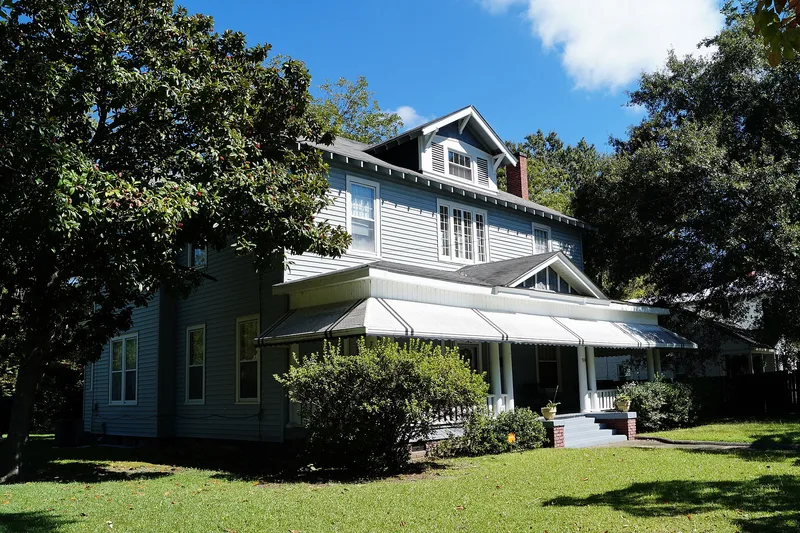
Skinnerville-Greenville Heights is a residential neighborhood of about ninety-five acres just west of downtown Greenville, North Carolina. It combines two subdivisions: Skinnerville, platted by Harry Skinner in 1882, and Greenville Heights, subdivided in 1907. Most of its 337 buildings, sites and structures are houses, ranging from Italianate and Queen Anne dwellings of the late nineteenth century to Craftsman bungalows, Colonial Revival homes, Period Cottages, Minimal Traditional houses and Ranch houses built through the mid-twentieth century. The district also contains the 1929 Spanish Colonial Revival Third Street Elementary School, Cherry Hill Cemetery, with markers dating from 1845, and a railroad corridor from 1890. Two earlier listed houses, the E. B. Ficklen House and the Jesse Moye House, stand along Martin Luther King Jr. Drive. Many modest duplexes were built to house African American workers. The neighborhood is significant as a largely intact record of Greenville's growth as a regional center, with a period of significance ending in 1955.
Machine-generated summary. This summary was generated by a language model from the official nomination document and has not been reviewed line by line by an editor. It may contain errors. Check the source document before relying on any detail. Source: nomination document (PDF) · catalog entry. Generated October 2026 (model claude-sonnet-5-5, prompt v1.0-2026-10-29).
| Period of significance | Ending 1955 (the form gives the end of the period as 1955; the full range is not shown in the excerpt) |
|---|---|
| Styles | Queen Anne; Bungalow/Craftsman; Colonial Revival; Tudor Revival; Cape Cod; Minimal Traditional; Ranch; Period Cottage |
| Areas of significance | Architecture, Community Planning and Development |
| Acreage | 95 |
| Boundary source | NPS cultural-resource GIS polygon |
| Full listing page | Skinnerville-Greenville Heights Historic District (property record) |
What listing means for this property
This is a historic district. Buildings within its boundary are either contributing (they add to the district's significance) or non-contributing. Owners of contributing income-producing buildings can claim the 20% federal rehabilitation tax credit; homeowners should look at state credits. National Register districts impose no design review by themselves; a local historic district ordinance, if one exists, does (the difference explained).
General information, not legal or tax advice. Rules change; confirm with your State Historic Preservation Office or a qualified adviser.