Siler City Commercial Historic District

The National Park Service has not published a boundary polygon for this district; the map shows the listed properties inside it and the district's reference point.
Why it's listed
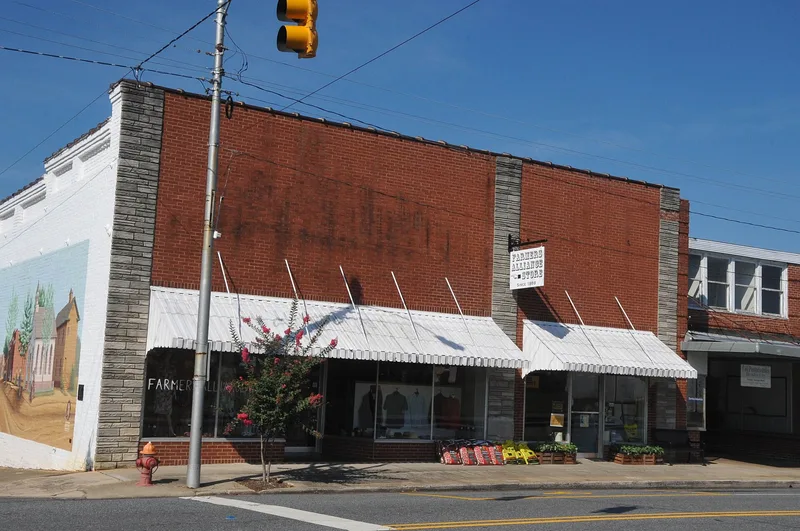
Siler City's central business district is a cluster of one- and two-story brick commercial buildings, mostly built between 1900 and 1919, with the peak of construction between 1910 and 1915. The town was laid out in 1884 after the Cape Fear and Yadkin Valley Railway reached the crossroads, and frame stores were gradually replaced with brick after repeated fires. Most buildings have decorative brick corbelling at the cornice, segmentally arched windows and parapeted roofs. Several stand out, including the 1908 Hadley Hotel, described as an eclectic Victorian building with Eastlake detailing, and the 1913 Chatham Bank, noted for stonework trim and pressed brick. Construction slowed after the Great Depression began in 1929 and resumed after World War II. The district is listed for its role in the town's commercial and civic growth and for the concentration of early-twentieth-century commercial architecture in the town.
Machine-generated summary. This summary was generated by a language model from the official nomination document and has not been reviewed line by line by an editor. It may contain errors. Check the source document before relying on any detail. Source: nomination document (PDF) · catalog entry. Generated October 2026 (model claude-haiku-5-5, prompt v1.1-2026-10-29).
| Period of significance | C. 1897-1950 |
|---|---|
| Styles | Commercial style; Colonial Revival |
| Areas of significance | Architecture, Commerce, Community Planning and Development |
| Acreage | 6.2 |
| Boundary source | not published |
| Full listing page | Siler City Commercial Historic District (property record) |
What listing means for this property
This is a historic district. Buildings within its boundary are either contributing (they add to the district's significance) or non-contributing. Owners of contributing income-producing buildings can claim the 20% federal rehabilitation tax credit; homeowners should look at state credits. National Register districts impose no design review by themselves; a local historic district ordinance, if one exists, does (the difference explained).
General information, not legal or tax advice. Rules change; confirm with your State Historic Preservation Office or a qualified adviser.