Seventh Avenue Depot District

Why it's listed
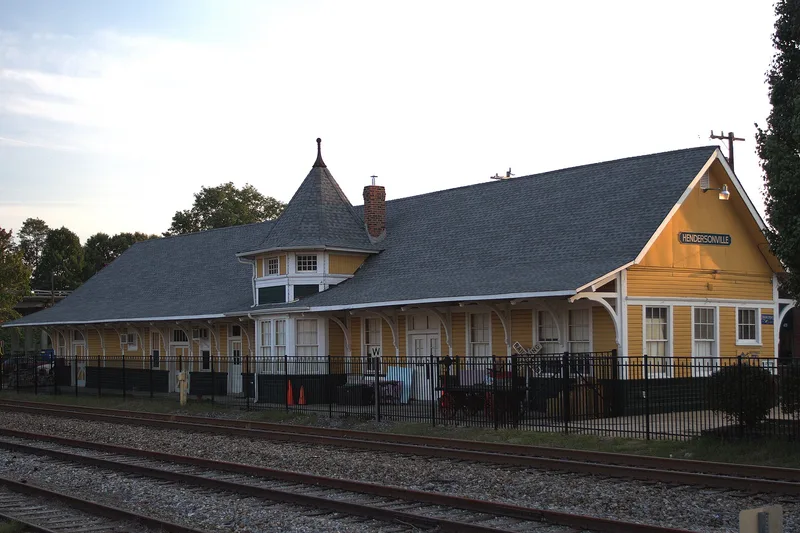
Seventh Avenue East in Hendersonville, North Carolina, forms a small commercial district that grew up around the town's railroad depot. Rail service reached Hendersonville in 1879, and the neighborhood developed through the late nineteenth and early twentieth centuries to serve travelers and local trade. The district contains about thirty-two resources, including a frame Craftsman-influenced depot built around 1902 to 1904, the two-story Station Hotel, brick stores and warehouses, two houses, and a surviving block of early brick street paving. Most buildings are plain one- and two-story brick structures with corbelled cornices and storefronts altered only modestly. Little building took place after 1929, which helped keep the area's character intact. The loss of passenger rail service led to decline, and the depot is now vacant. The district was listed for its role in transportation and commerce and for its architecture, with a period of significance from about 1898 to 1929.
Machine-generated summary. This summary was generated by a language model from the official nomination document and has not been reviewed line by line by an editor. It may contain errors. Check the source document before relying on any detail. Source: nomination document (PDF) · catalog entry. Generated October 2026 (model claude-sonnet-5-5, prompt v1.0-2026-10-29).
| Period of significance | ca. 1898-1929 |
|---|---|
| Styles | Commercial style, Queen Anne, Craftsman |
| Areas of significance | Commerce, Transportation, Architecture |
| Acreage | 10 |
| Boundary source | NPS cultural-resource GIS polygon |
| Full listing page | Seventh Avenue Depot District (property record) |
What listing means for this property
This is a historic district. Buildings within its boundary are either contributing (they add to the district's significance) or non-contributing. Owners of contributing income-producing buildings can claim the 20% federal rehabilitation tax credit; homeowners should look at state credits. National Register districts impose no design review by themselves; a local historic district ordinance, if one exists, does (the difference explained).
Noted as vacant in the nomination. Nomination documents can be decades old; current status may differ. If you are considering buying an empty listed property, read the due-diligence checklist.
General information, not legal or tax advice. Rules change; confirm with your State Historic Preservation Office or a qualified adviser.