Santeetlah Hydroelectric Development

Why it's listed
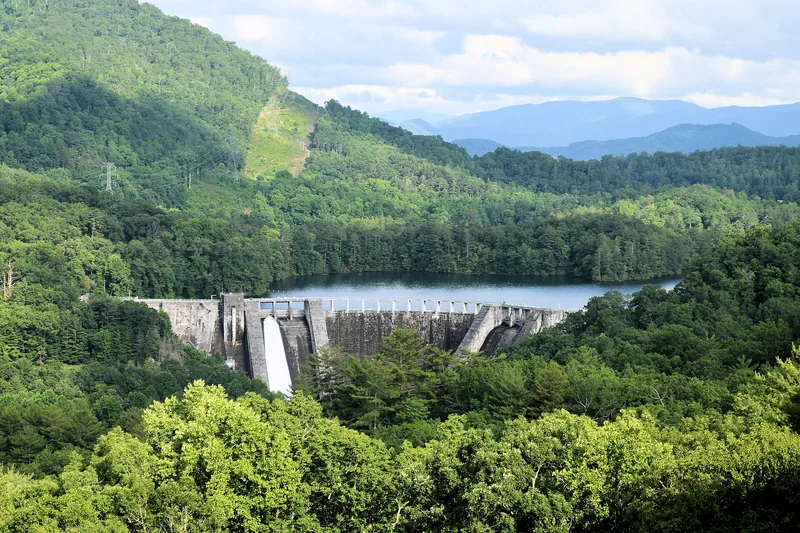
Built between 1926 and 1928 on the Cheoah and Little Tennessee Rivers in Graham County, the Santeetlah Hydroelectric Development supplied power to Alcoa's aluminum works in Tennessee. Its central dam combines gravity and arch construction and stands 212 feet high. The powerhouse, housing two Francis turbines with a combined capacity of 45 MW, is built of concrete and Flemish bond brick with cast concrete Doric capitals and terra cotta trim. A five-mile pipeline and tunnel system carries water from the reservoir to the powerhouse, ending at a steel surge tank about 550 feet above the river. The complex is significant for its engineering, since the dam was among the first in the country to control concrete quality with water-cement ratio measurements and vibratory tampers. Its industrial architecture and the retention of original features across the dam, gatehouse, and powerhouse add to its value. The mountain setting has changed little since completion, and the facility remains part of Alcoa's regional hydroelectric system.
Machine-generated summary. This summary was generated by a language model from the official nomination document and has not been reviewed line by line by an editor. It may contain errors. Check the source document before relying on any detail. Source: nomination document (PDF) · catalog entry. Generated October 2026 (model claude-haiku-5-5, prompt v1.1-2026-10-29).
| Period of significance | 1928-1953 |
|---|---|
| Styles | Classical Revival |
| Areas of significance | Engineering, Architecture, Industry |
| Acreage | 397 |
| Boundary source | NPS cultural-resource GIS polygon |
| Full listing page | Santeetlah Hydroelectric Development (property record) |
What listing means for this property
This is a historic district. Buildings within its boundary are either contributing (they add to the district's significance) or non-contributing. Owners of contributing income-producing buildings can claim the 20% federal rehabilitation tax credit; homeowners should look at state credits. National Register districts impose no design review by themselves; a local historic district ordinance, if one exists, does (the difference explained).
General information, not legal or tax advice. Rules change; confirm with your State Historic Preservation Office or a qualified adviser.