Rocky Mount Central City Historic District

Why it's listed
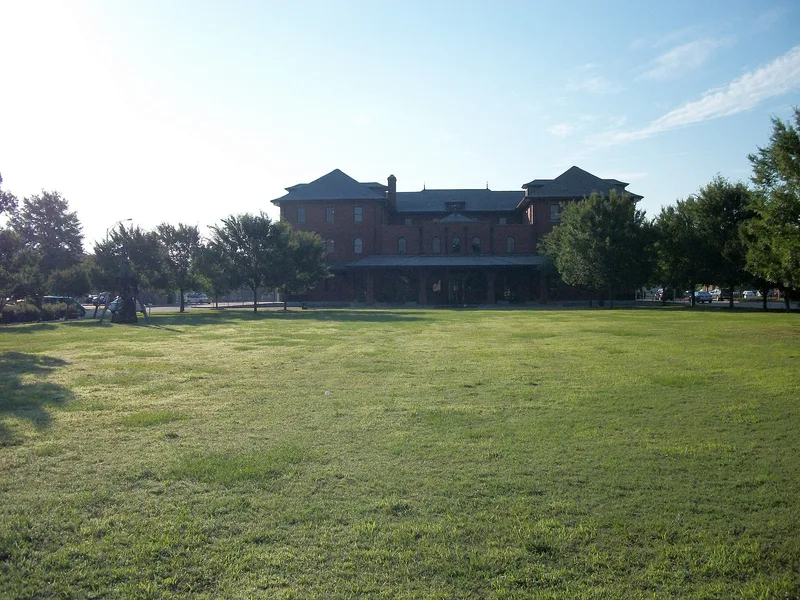
Rocky Mount's central city is a downtown district of about 98 acres, centered on a broad Main Street with railroad tracks running down its middle. Most of its red brick buildings date from 1890 to 1925, when bright leaf tobacco markets and the railroad brought rapid growth. At the south end stands the Romanesque Atlantic Coast Line station of 1903, and at the north end a group of twelve tobacco warehouses and processing buildings. Washington Street parallels Main and keeps many little-altered facades. Notable buildings include the Philips Building and First National Bank by John Christie Stout, the Planters Bank by H. W. Simpson, the Beaux Arts post office of 1914, and cast metal fronts by Mesker Brothers. Elaborate brickwork, classical detailing and a few Art Deco renovations add variety. Because little building took place after the Depression, the core keeps the look of its boom years, apart from scattered parking lots and a few intrusive newer buildings.
Machine-generated summary. This summary was generated by a language model from the official nomination document and has not been reviewed line by line by an editor. It may contain errors. Check the source document before relying on any detail. Source: nomination document (PDF) · catalog entry. Generated October 2026 (model claude-sonnet-5-5, prompt v1.0-2026-10-29).
| Styles | Late nineteenth and early twentieth century commercial, with Classical Revival, Romanesque, Beaux Arts, Tudoresque, Mediterranean Revival and Art Deco examples |
|---|---|
| Areas of significance | Commerce, Transportation, Architecture |
| Acreage | 98 |
| Boundary source | NPS cultural-resource GIS polygon |
| Full listing page | Rocky Mount Central City Historic District (property record) |
What listing means for this property
This is a historic district. Buildings within its boundary are either contributing (they add to the district's significance) or non-contributing. Owners of contributing income-producing buildings can claim the 20% federal rehabilitation tax credit; homeowners should look at state credits. National Register districts impose no design review by themselves; a local historic district ordinance, if one exists, does (the difference explained).
General information, not legal or tax advice. Rules change; confirm with your State Historic Preservation Office or a qualified adviser.