Rockingham Historic District

Why it's listed
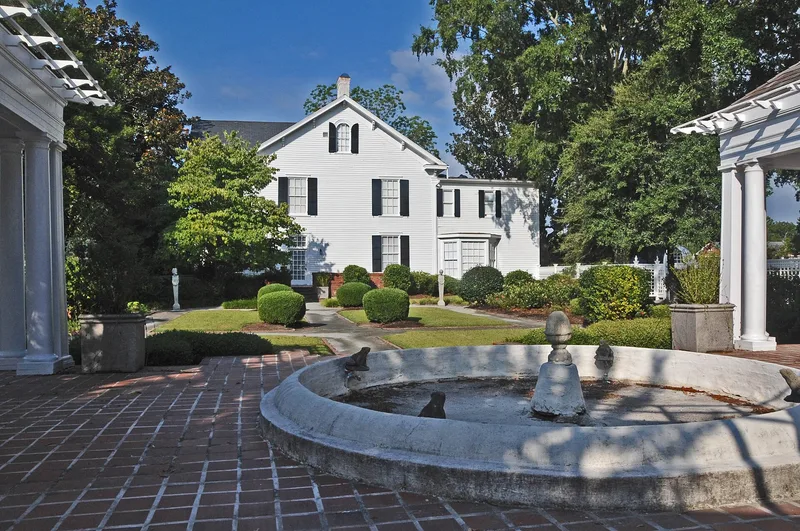
East of Rockingham's downtown commercial center lies a neighborhood of more than 200 buildings, mostly residential, dating chiefly from the mid-nineteenth to the early twentieth century. Fayetteville Road, the old route toward Cross Creek, is its main thoroughfare. Between 1850 and 1870 early textile manufacturers built large houses on spacious grounds along it, and their descendants later built on lots subdivided from those estates. Frame construction dominates, using local yellow pine, and tall willow and water oaks line the streets. The oldest surviving house is the Steele-Johnson-Cole House of 1838, which combines Federal and Greek Revival elements. Later examples include Greek Revival porches, Italianate ornament, a Queen Anne house with a three-story tower, Neo-Classical homes designed by a Charlotte firm, and many Colonial Revival houses built during the textile boom of the early 1900s. About two-thirds of the structures contribute to the district's character, and few are definite intrusions. The district also holds two early churches, an early school and a family cemetery.
Machine-generated summary. This summary was generated by a language model from the official nomination document and has not been reviewed line by line by an editor. It may contain errors. Check the source document before relying on any detail. Source: nomination document (PDF) · catalog entry. Generated October 2026 (model claude-sonnet-5-5, prompt v1.0-2026-10-29).
| Styles | Mixed: Federal, Greek Revival, Italianate, Queen Anne, Neo-Classical, Colonial Revival, Bungalow |
|---|---|
| Areas of significance | Education, Architecture, Religion |
| Acreage | 165 |
| Boundary source | NPS cultural-resource GIS polygon |
| Full listing page | Rockingham Historic District (property record) |
What listing means for this property
This is a historic district. Buildings within its boundary are either contributing (they add to the district's significance) or non-contributing. Owners of contributing income-producing buildings can claim the 20% federal rehabilitation tax credit; homeowners should look at state credits. National Register districts impose no design review by themselves; a local historic district ordinance, if one exists, does (the difference explained).
General information, not legal or tax advice. Rules change; confirm with your State Historic Preservation Office or a qualified adviser.