Reynolda Historic District

Why it's listed
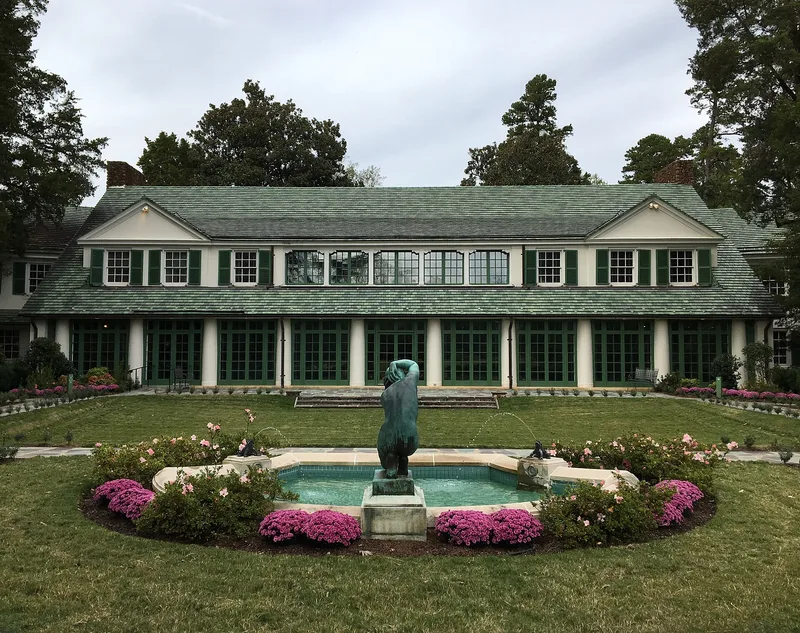
Reynolda House is a long, low Colonial Revival residence on the northwest edge of Winston-Salem, designed by Philadelphia architect Charles Barton Keen and built between 1914 and 1917 for tobacco executive R. J. Reynolds and his wife Katharine Smith Reynolds. Its white stucco walls, green tile roof and flanking wings give it an informal, cottage-like profile, while the interior holds a two-story living room and marble mantels in each public room. It is regarded as a significant example of the period's residential design. The surrounding district includes gardens laid out by landscape architect Thomas Warren Sears, a village of workers' housing, schools and farm buildings, and a church established in 1915. Together these reflect the Reynolds family's effort to build a model farm estate that served the rural Piedmont. The district also reflects the wealth generated by the bright leaf tobacco industry that underwrote the estate. Its later use as a public museum and educational center extends that civic purpose.
Machine-generated summary. This summary was generated by a language model from the official nomination document and has not been reviewed line by line by an editor. It may contain errors. Check the source document before relying on any detail. Source: nomination document (PDF) · catalog entry. Generated October 2026 (model claude-haiku-5-5, prompt v1.1-2026-10-29).
| Period of significance | 1900-1930 |
|---|---|
| Styles | Colonial Revival |
| Areas of significance | Industry, Community Planning and Development, Landscape Architecture, Agriculture, Architecture, Social History |
| Acreage | 178 |
| Boundary source | NPS cultural-resource GIS polygon |
| Full listing page | Reynolda Historic District (property record) |
What listing means for this property
This is a historic district. Buildings within its boundary are either contributing (they add to the district's significance) or non-contributing. Owners of contributing income-producing buildings can claim the 20% federal rehabilitation tax credit; homeowners should look at state credits. National Register districts impose no design review by themselves; a local historic district ordinance, if one exists, does (the difference explained).
General information, not legal or tax advice. Rules change; confirm with your State Historic Preservation Office or a qualified adviser.