Pinehurst Race Track

Why it's listed
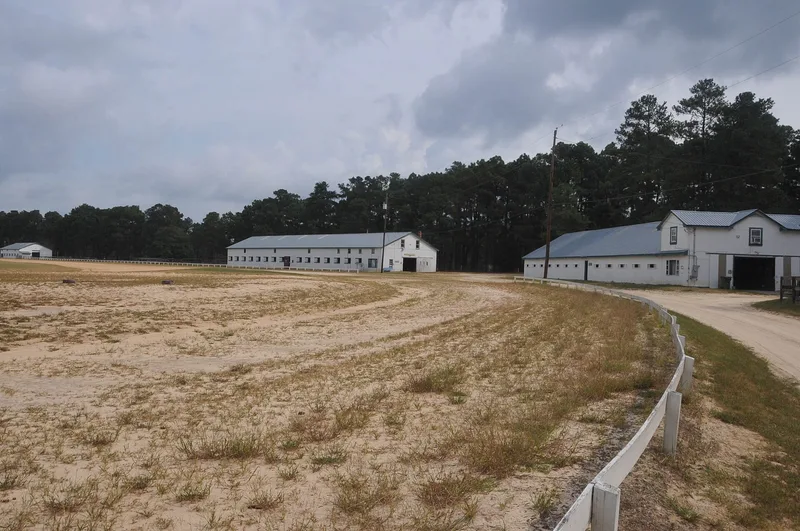
Pinehurst Race Track is a horse training and racing complex of about fifty acres on the edge of the Village of Pinehurst in Moore County. Two oval sand tracks, laid out by 1915, form its core: an inner half-mile track for trotters and pacers and an outer five-eighths-mile track for Thoroughbreds. Around them stand timber barns from the 1910s, paddocks, a farrier shop, a clubhouse, a harness shop and the Amphidrome, a stuccoed Mission-style exhibition building from about 1917. A tornado around 1937 removed two of its four corner towers and its tile roof. Leonard Tufts, who ran the resort village, developed the complex, which hosted horse racing, livestock shows and exhibitions. It is described as the oldest continuously used race track in North Carolina and became a winter training ground for young harness horses. Nineteen resources date from before 1942; fourteen later ones are non-contributing. The Village of Pinehurst purchased the site in 1992 to preserve it.
Machine-generated summary. This summary was generated by a language model from the official nomination document and has not been reviewed line by line by an editor. It may contain errors. Check the source document before relying on any detail. Source: nomination document (PDF) · catalog entry. Generated October 2026 (model claude-sonnet-5-5, prompt v1.0-2026-10-29).
| Styles | Mission/Spanish Colonial Revival; Agricultural/Vernacular |
|---|---|
| Areas of significance | Agriculture, Entertainment/Recreation, Architecture |
| Acreage | 50 |
| Boundary source | NPS cultural-resource GIS polygon |
| Full listing page | Pinehurst Race Track (property record) |
What listing means for this property
This is a historic district. Buildings within its boundary are either contributing (they add to the district's significance) or non-contributing. Owners of contributing income-producing buildings can claim the 20% federal rehabilitation tax credit; homeowners should look at state credits. National Register districts impose no design review by themselves; a local historic district ordinance, if one exists, does (the difference explained).
General information, not legal or tax advice. Rules change; confirm with your State Historic Preservation Office or a qualified adviser.