Pinehurst Historic District

Why it's listed
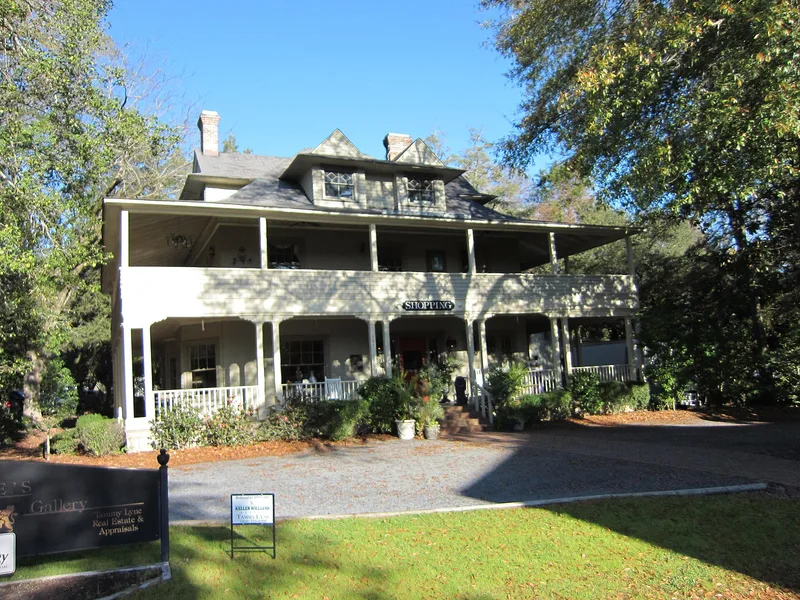
Pinehurst is a planned resort village of about 100 acres in the North Carolina Sandhills, laid out in 1895 by landscape architect Frederick Law Olmsted for Boston inventor James W. Tufts. Tufts wanted a winter health resort for middle-class Northerners, set in a long-leaf pine forest. Olmsted's plan, closely following his earlier Riverside, Illinois design, centered on an egg-shaped village green ringed by curving streets with no straight lines or sharp angles. His assistant Warren H. Manning oversaw the planting, and the village was built in seven months and opened in January 1896. Its simple frame buildings, including the Holly Inn, general store, boarding houses, cottages and the later Carolina Hotel, show Colonial Revival and Queen Anne influences. The plantings have now matured, and the original layout survives largely unchanged. Golf, introduced in 1897, became the main attraction, and five courses now surround the village.
Machine-generated summary. This summary was generated by a language model from the official nomination document and has not been reviewed line by line by an editor. It may contain errors. Check the source document before relying on any detail. Source: nomination document (PDF) · catalog entry. Generated October 2026 (model claude-sonnet-5-5, prompt v1.0-2026-10-29).
| Period of significance | 19th and 20th century; specific date 1895 |
|---|---|
| Styles | Colonial Revival with Queen Anne ornament; Romanesque Revival for the movie theatre |
| Areas of significance | Landscape Architecture, Architecture, Social History |
| Acreage | 250 |
| Boundary source | NPS cultural-resource GIS polygon |
| Full listing page | Pinehurst Historic District (property record) |
What listing means for this property
This is a historic district. Buildings within its boundary are either contributing (they add to the district's significance) or non-contributing. Owners of contributing income-producing buildings can claim the 20% federal rehabilitation tax credit; homeowners should look at state credits. National Register districts impose no design review by themselves; a local historic district ordinance, if one exists, does (the difference explained).
General information, not legal or tax advice. Rules change; confirm with your State Historic Preservation Office or a qualified adviser.