Pearl Mill Village Historic District

Why it's listed
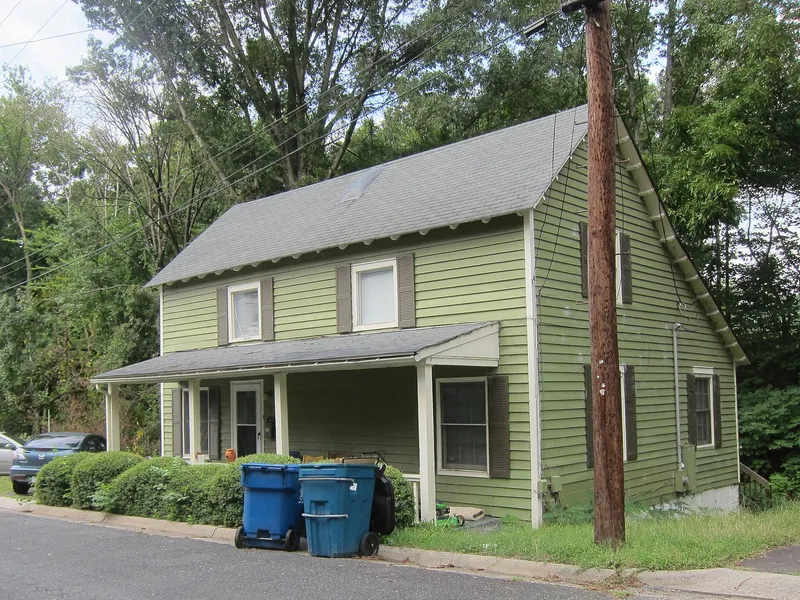
Pearl Mill Village is a compact group of twenty-six mill houses on the 900 blocks of Orient and Washington Streets in Durham. Twenty-two are two-story, one-room-deep frame duplexes built around 1905, with gable roofs that extend over a tall rear shed. Four are one-story bungalows built by the mill around 1924. The houses sit in uniform rows with shallow front yards, on a hillside set apart by a ravine, a railroad line and busy streets. Pearl Cotton Mills was founded in 1892 by Brodie L. Duke and came under Erwin Cotton Mills control, closing in 1968. Of roughly sixty company houses in four clusters, this is the largest surviving group, and the mill itself is gone. The mill sold the houses to private owners in 1945, and later changes include replaced porch floors and posts, new siding and some altered doors, yet the district still reads as a mill village. Its significance rests on its link to Durham's textile industry and its intact house types.
Machine-generated summary. This summary was generated by a language model from the official nomination document and has not been reviewed line by line by an editor. It may contain errors. Check the source document before relying on any detail. Source: nomination document (PDF) · catalog entry. Generated October 2026 (model claude-sonnet-5-5, prompt v1.0-2026-10-29).
| Period of significance | 1900- |
|---|---|
| Areas of significance | Industry, Architecture |
| Acreage | 6.3 |
| Boundary source | NPS cultural-resource GIS polygon |
| Full listing page | Pearl Mill Village Historic District (property record) |
What listing means for this property
This is a historic district. Buildings within its boundary are either contributing (they add to the district's significance) or non-contributing. Owners of contributing income-producing buildings can claim the 20% federal rehabilitation tax credit; homeowners should look at state credits. National Register districts impose no design review by themselves; a local historic district ordinance, if one exists, does (the difference explained).
General information, not legal or tax advice. Rules change; confirm with your State Historic Preservation Office or a qualified adviser.