Oteen Veterans Administration Hospital Historic District
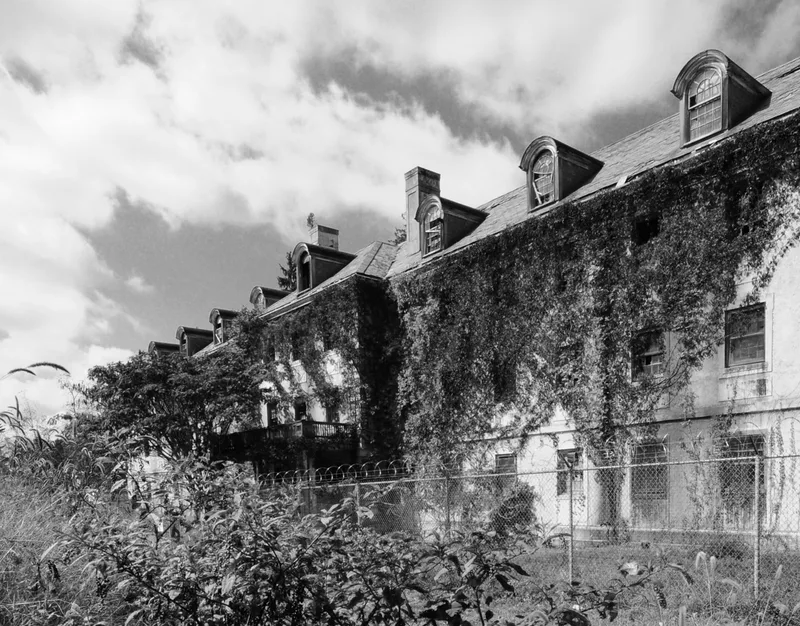

Why it's listed
Built between 1924 and 1940 on a grassy knoll beside the Blue Ridge Parkway in Asheville, this group of white frame Colonial Revival and yellow stucco Georgian Revival buildings replaced a complex of World War I-era wooden wards. The main administration building, completed in 1928 at a cost of $750,000, is a horseshoe-shaped four-story structure with incised quoining, classical cornices and a central entrance court. The site grew out of U.S. Army General Hospital No. 19, opened in 1918, and became a Veterans Bureau tuberculosis facility in the 1920s. Its wards used long screened porches and clerestory windows to admit sunshine and fresh mountain air, the treatment methods of the period. By 1944 the hospital held 1,269 beds, and it was regarded as the largest and best equipped tuberculosis plant in the VA system. Its architecture and its role in respiratory medicine give it its importance.
Machine-generated summary. This summary was generated by a language model from the official nomination document and has not been reviewed line by line by an editor. It may contain errors. Check the source document before relying on any detail. Source: nomination document (PDF) · catalog entry. Generated October 2026 (model claude-haiku-5-5, prompt v1.1-2026-10-29).
| Period of significance | 1924-1940 |
|---|---|
| Styles | Georgian Revival; Colonial Revival |
| Areas of significance | Military, Health/Medicine, Architecture |
| Acreage | 30 |
| Boundary source | NPS cultural-resource GIS polygon |
| Full listing page | Oteen Veterans Administration Hospital Historic District (property record) |
What listing means for this property
This is a historic district. Buildings within its boundary are either contributing (they add to the district's significance) or non-contributing. Owners of contributing income-producing buildings can claim the 20% federal rehabilitation tax credit; homeowners should look at state credits. National Register districts impose no design review by themselves; a local historic district ordinance, if one exists, does (the difference explained).
General information, not legal or tax advice. Rules change; confirm with your State Historic Preservation Office or a qualified adviser.