Old Chapel Hill Cemetery

The National Park Service has not published a boundary polygon for this district; the map shows the listed properties inside it and the district's reference point.
Why it's listed
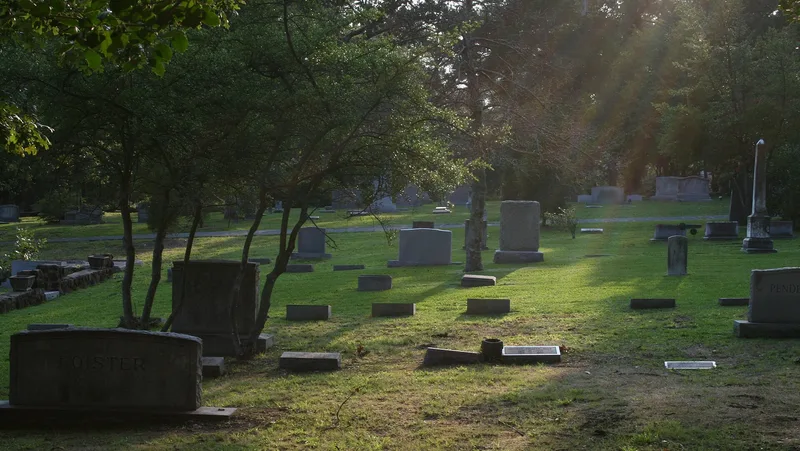
Founded in the late eighteenth century as a burying ground for the University of North Carolina and the village of Chapel Hill, the cemetery covers 6.98 acres east of the campus. The first recorded interment is George Clarke, a nineteen-year-old student from Bertie County who died on September 28, 1798. Burials are arranged in sections by race and date, with Section B serving as the slave cemetery and the first dated African-American interment there dating to 1853. The Dialectic and Philanthropic Society plots hold cast-iron fences in Gothic Revival style and several marble headstones, ledgers and obelisks carved by stonecutters including George Lauder of Fayetteville. Among those buried here are educators, physicians, engineers, writers and town figures, and the cemetery is regarded as holding one of the most distinguished groups of graves in North Carolina. Its monuments range from antebellum tomb-tables to later family memorials, and the grounds remain shaded by oaks, cedars and hickories.
Machine-generated summary. This summary was generated by a language model from the official nomination document and has not been reviewed line by line by an editor. It may contain errors. Check the source document before relying on any detail. Source: nomination document (PDF) · catalog entry. Generated October 2026 (model claude-haiku-5-5, prompt v1.1-2026-10-29).
| Period of significance | 1798-1944 |
|---|---|
| Areas of significance | Social History, Black, Other |
| Acreage | 7 |
| Boundary source | not published |
| Full listing page | Old Chapel Hill Cemetery (property record) |
What listing means for this property
This is a historic district. Buildings within its boundary are either contributing (they add to the district's significance) or non-contributing. Owners of contributing income-producing buildings can claim the 20% federal rehabilitation tax credit; homeowners should look at state credits. National Register districts impose no design review by themselves; a local historic district ordinance, if one exists, does (the difference explained).
General information, not legal or tax advice. Rules change; confirm with your State Historic Preservation Office or a qualified adviser.