Oakdale Cotton Mill Village

Why it's listed
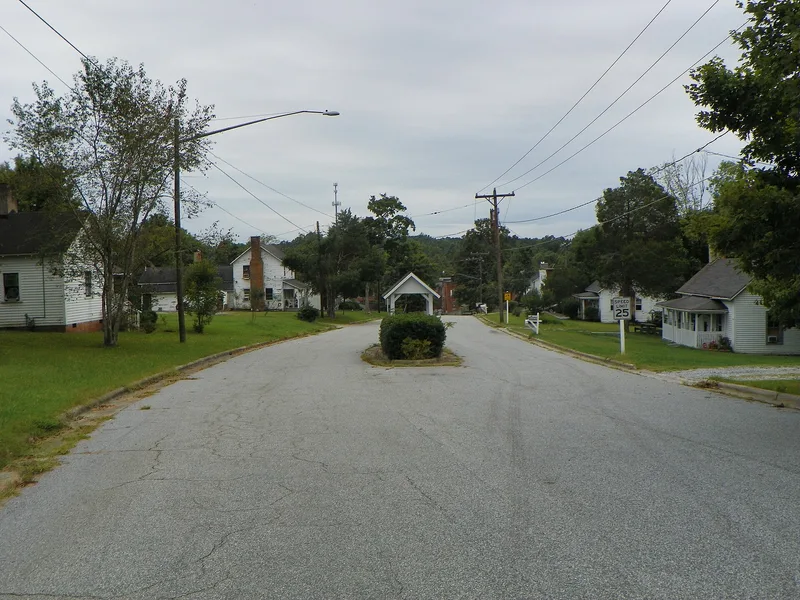
Oakdale is a mill village on the east bank of the Deep River, about a mile southeast of Jamestown. It includes a brick factory complex raised in stages during the 1880s, a brick store, and frame two-story mill houses built between about 1900 and 1924. The factory has load-bearing brick walls, a four-story tower with corbeled string courses and pilasters, and heavy timber interiors. The site had earlier served as a grist mill and, during the Civil War, as a gun factory that produced between 1,500 and 3,000 rifles. It became a cotton mill in 1865 under the Logan Manufacturing Company, later renamed Oakdale Mills. Power came first from water wheels and turbines, then steam, and by 1940 entirely electricity. The mill is described as the oldest textile firm in continuous operation in Guilford County. It keeps the traits of nineteenth-century Piedmont industry: a small family-owned mill beside a water-power site, surrounded by its village.
Machine-generated summary. This summary was generated by a language model from the official nomination document and has not been reviewed line by line by an editor. It may contain errors. Check the source document before relying on any detail. Source: nomination document (PDF) · catalog entry. Generated October 2026 (model claude-sonnet-5-5, prompt v1.0-2026-10-29).
| Styles | Italianate character, most evident in the mill tower |
|---|---|
| Areas of significance | Industry |
| Acreage | 50 |
| Boundary source | NPS cultural-resource GIS polygon |
| Full listing page | Oakdale Cotton Mill Village (property record) |
What listing means for this property
This is a historic district. Buildings within its boundary are either contributing (they add to the district's significance) or non-contributing. Owners of contributing income-producing buildings can claim the 20% federal rehabilitation tax credit; homeowners should look at state credits. National Register districts impose no design review by themselves; a local historic district ordinance, if one exists, does (the difference explained).
General information, not legal or tax advice. Rules change; confirm with your State Historic Preservation Office or a qualified adviser.