Narrows Dam and Power Plant Complex

Why it's listed
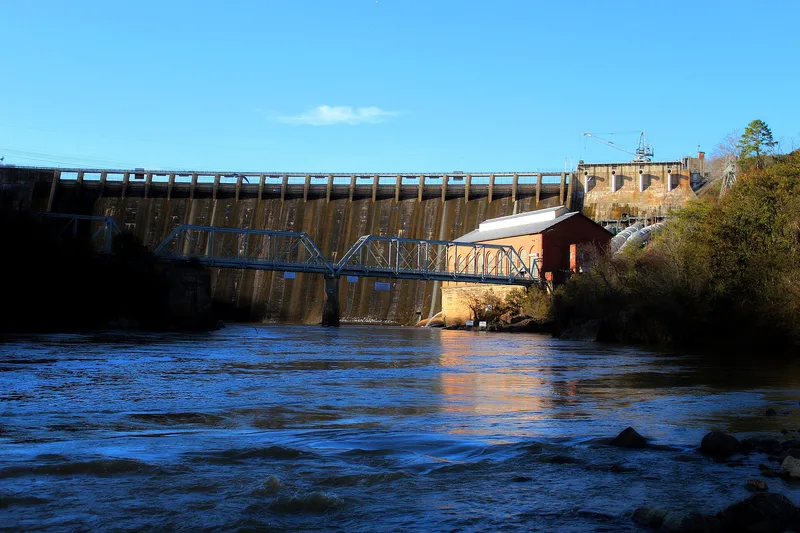
The Narrows complex sits on the Yadkin River near Badin and includes a concrete dam, a power house, a steel truss bridge and the foundations of an earlier French aluminum smelter and power house from 1912-14. The dam was completed in the summer of 1917 and was then the world's highest overflow type dam. James W. Rickey, Alcoa's chief hydraulic engineer, designed it. It is 216 feet high and 1,654 feet long, creates a head of 177 feet, and forms Badin Lake, a reservoir of over 5,300 acres. The one-story steel-framed power plant has brick walls, a terra cotta tile roof and large arched windows that give it a Spanish Revival look. Three penstocks feed turbines driving five generators with a capacity of 96,500 kilowatts. Power travels to the Badin Works smelter, one and one-half miles away, where it is converted for use in aluminum production. A Warren lattice truss bridge links the west bank to the plant.
Machine-generated summary. This summary was generated by a language model from the official nomination document and has not been reviewed line by line by an editor. It may contain errors. Check the source document before relying on any detail. Source: nomination document (PDF) · catalog entry. Generated October 2026 (model claude-sonnet-5-5, prompt v1.0-2026-10-29).
| Styles | Power plant described as having a Spanish Revival appearance |
|---|---|
| Areas of significance | Industry, Engineering |
| Acreage | 72 |
| Boundary source | NPS cultural-resource GIS polygon |
| Full listing page | Narrows Dam and Power Plant Complex (property record) |
What listing means for this property
This is a historic district. Buildings within its boundary are either contributing (they add to the district's significance) or non-contributing. Owners of contributing income-producing buildings can claim the 20% federal rehabilitation tax credit; homeowners should look at state credits. National Register districts impose no design review by themselves; a local historic district ordinance, if one exists, does (the difference explained).
General information, not legal or tax advice. Rules change; confirm with your State Historic Preservation Office or a qualified adviser.