Murray's Mill Historic District

Why it's listed
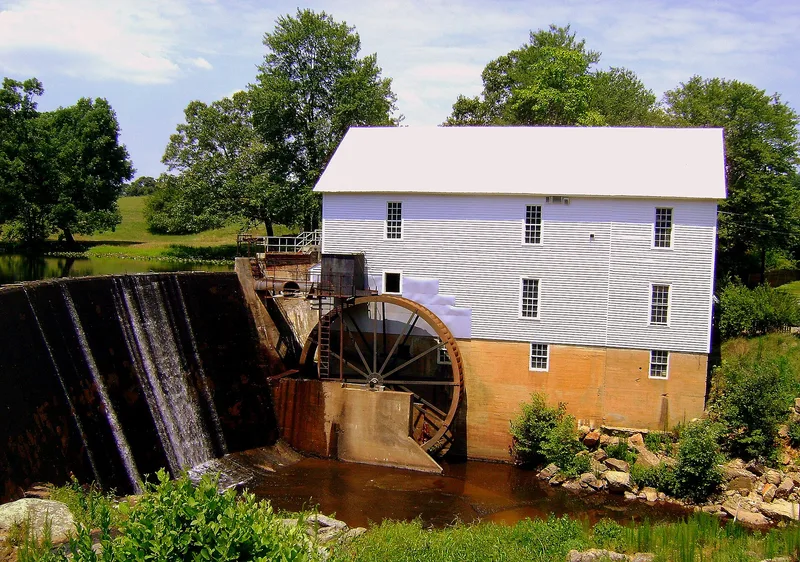
Murray's Mill Historic District covers roughly 150 acres of rolling countryside along Ball's Creek in eastern Catawba County. At its center is a two-story frame mill built in 1912-1913 beside a concrete dam and mill pond. The mill still holds its 1913 machinery and a large overshot wheel. Around it are a grain house, a store that was rolled across the road to make room for the new mill, four Murray family houses, a barn and many small farm outbuildings. A mill operated here between 1873 and 1883, and the Murray family ran it from 1883 until it closed in 1967, across four generations. It ground meal, flour and feed and also sawed lumber. The district is described as the last surviving complex of its type in the county and the last water-driven mill to operate there. Its plain gable-roofed vernacular buildings and the setting around them have changed little since the early twentieth century.
Machine-generated summary. This summary was generated by a language model from the official nomination document and has not been reviewed line by line by an editor. It may contain errors. Check the source document before relying on any detail. Source: nomination document (PDF) · catalog entry. Generated October 2026 (model claude-sonnet-5-5, prompt v1.0-2026-10-29).
| Period of significance | 1800-1899 and 1900- (specific dates not given; mill operated 1883-1967) |
|---|---|
| Styles | Vernacular |
| Areas of significance | Industry, Architecture |
| Acreage | 152.9 |
| Boundary source | NPS cultural-resource GIS polygon |
| Full listing page | Murray's Mill Historic District (property record) |
What listing means for this property
This is a historic district. Buildings within its boundary are either contributing (they add to the district's significance) or non-contributing. Owners of contributing income-producing buildings can claim the 20% federal rehabilitation tax credit; homeowners should look at state credits. National Register districts impose no design review by themselves; a local historic district ordinance, if one exists, does (the difference explained).
General information, not legal or tax advice. Rules change; confirm with your State Historic Preservation Office or a qualified adviser.