Mount Hope Cemetery
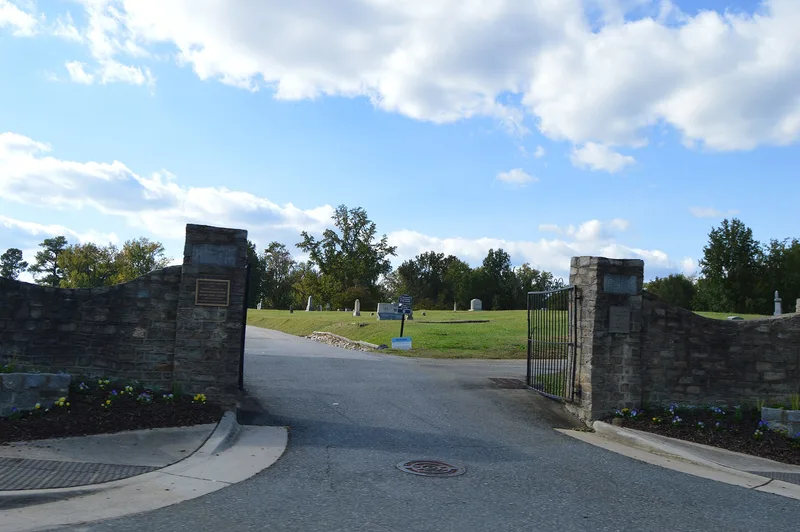

Why it's listed
Mount Hope Cemetery occupies a hilly site above Rocky Branch on Fayetteville Street, south of downtown Raleigh. The city established it about 1872 for its African American residents after the Black section of City Cemetery filled. The original 11.5 acres follow a picturesque plan of looping drives dividing the grounds into sections and family plots, and later additions through 1952 extend the grounds to about 29.3 nominated acres. Roughly 1,450 monuments remain, though records list over 7,000 burials. They include marble headstones and obelisks, mass-produced cast concrete markers, granite family monuments, and a granite fieldstone mausoleum built in 1902 for W. H. Matthews. Several stones carry the signatures of local carvers such as Columbus Stronach, C. A. Goodwin and the Cooper brothers. Cemetery records burned in the 1930s, so much early history is known mainly from the monuments. The cemetery was listed for its ethnic heritage as an early municipal Black cemetery, its landscape design, and its funerary sculpture, with 1872 to 1952 as its period of significance.
Machine-generated summary. This summary was generated by a language model from the official nomination document and has not been reviewed line by line by an editor. It may contain errors. Check the source document before relying on any detail. Source: nomination document (PDF) · catalog entry. Generated October 2026 (model claude-sonnet-5-5, prompt v1.0-2026-10-29).
| Period of significance | ca. 1872-1952 |
|---|---|
| Styles | N/A (picturesque garden cemetery design) |
| Areas of significance | Black, Landscape Architecture, Art, Community Planning and Development |
| Acreage | 29.3 |
| Boundary source | NPS cultural-resource GIS polygon |
| Full listing page | Mount Hope Cemetery (property record) |
What listing means for this property
This is a historic district. Buildings within its boundary are either contributing (they add to the district's significance) or non-contributing. Owners of contributing income-producing buildings can claim the 20% federal rehabilitation tax credit; homeowners should look at state credits. National Register districts impose no design review by themselves; a local historic district ordinance, if one exists, does (the difference explained).
General information, not legal or tax advice. Rules change; confirm with your State Historic Preservation Office or a qualified adviser.