Milton Historic District
Why it's listed
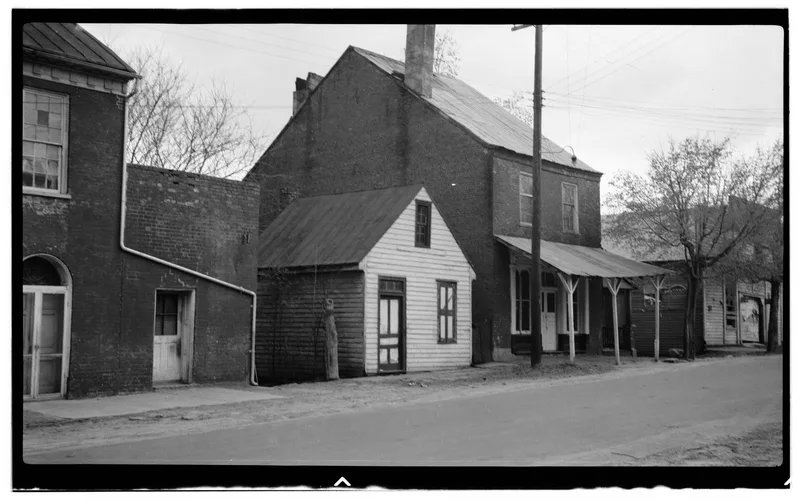
Milton is a small Piedmont town in Caswell County, North Carolina, set on a hilly promontory where Country Line Creek meets the Dan River. The whole town is the historic district. It was established by legislative act in 1796 to compete with Virginia for the tobacco trade, and grew into a market and social center for the surrounding plantations, with banks, academies, tobacco factories, a cotton mill and a racetrack. Railroad access came late, and the town lost out to Danville and Durham, shrinking from over 1,200 people before the Civil War. That decline preserved a remarkable set of buildings: the 1818 Union Tavern, Federal houses, the Greek Revival Baptist and Presbyterian churches, the Milton State Bank, seven Victorian row stores from the 1880s, raised cottages and a surviving tobacco factory. The cabinetmaker Tom Day worked in the town from about 1820 to 1859, and his work appears in local interiors and church furnishings.
Machine-generated summary. This summary was generated by a language model from the official nomination document and has not been reviewed line by line by an editor. It may contain errors. Check the source document before relying on any detail. Source: nomination document (PDF) · catalog entry. Generated October 2026 (model claude-sonnet-5-5, prompt v1.0-2026-10-29).
| Period of significance | 19th Century |
|---|---|
| Styles | Federal, Greek Revival and Victorian (Italianate, Gothic Revival accents) |
| Areas of significance | Commerce, Agriculture, Architecture |
| Acreage | 240 |
| Boundary source | NPS cultural-resource GIS polygon |
| Full listing page | Milton Historic District (property record) |
What listing means for this property
This is a historic district. Buildings within its boundary are either contributing (they add to the district's significance) or non-contributing. Owners of contributing income-producing buildings can claim the 20% federal rehabilitation tax credit; homeowners should look at state credits. National Register districts impose no design review by themselves; a local historic district ordinance, if one exists, does (the difference explained).
General information, not legal or tax advice. Rules change; confirm with your State Historic Preservation Office or a qualified adviser.