McElwee Houses

The National Park Service has not published a boundary polygon for this district; the map shows the listed properties inside it and the district's reference point.
Why it's listed
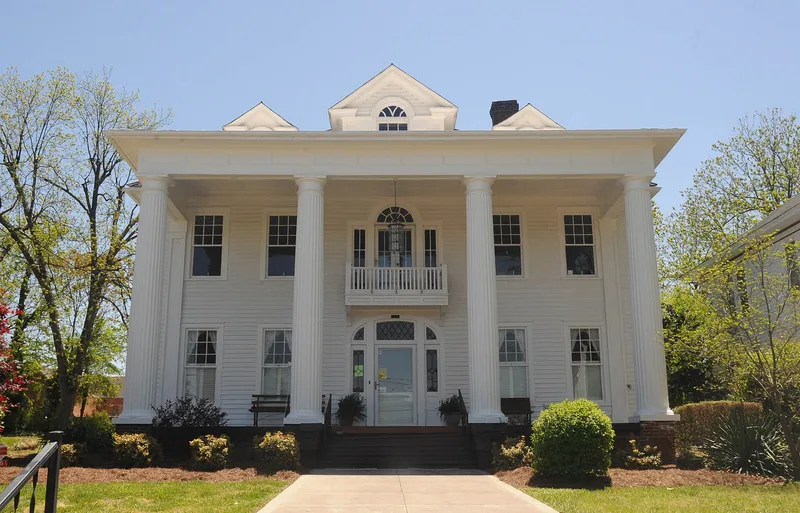
Four classically styled houses stand side by side at 122, 126, 134 and 140 Water Street in Statesville, beside the town's commercial district. They are what remains of a compound that John H. McElwee, a tobacco manufacturer, hoped would keep his children near him. His son William Henry McElwee built 122 Water Street around 1905, and his daughter Addie McElwee Thomas drew the plans for 126, built in 1906. Both have large columned porticos and Palladian-style dormer windows. Two older houses, 134 and 140, were moved slightly and remodelled between 1918 and 1925 by family members to match the classical look of their neighbors. Number 140 shows some Bungaloid influence and now houses law offices. McElwee's own mansard-style house was demolished for a parking lot. The row is regarded as a reflection of Statesville's early twentieth century industrial prosperity and includes two of the city's finest Neo-Classical Revival homes.
Machine-generated summary. This summary was generated by a language model from the official nomination document and has not been reviewed line by line by an editor. It may contain errors. Check the source document before relying on any detail. Source: nomination document (PDF) · catalog entry. Generated October 2026 (model claude-sonnet-5-5, prompt v1.0-2026-10-29).
| Period of significance | 1900- |
|---|---|
| Styles | Neo-Classical Revival/Colonial Revival, with Bungaloid influence at 140 Water Street |
| Areas of significance | Commerce, Architecture |
| Acreage | 1.5 |
| Boundary source | not published |
| Full listing page | McElwee Houses (property record) |
What listing means for this property
This is a historic district. Buildings within its boundary are either contributing (they add to the district's significance) or non-contributing. Owners of contributing income-producing buildings can claim the 20% federal rehabilitation tax credit; homeowners should look at state credits. National Register districts impose no design review by themselves; a local historic district ordinance, if one exists, does (the difference explained).
General information, not legal or tax advice. Rules change; confirm with your State Historic Preservation Office or a qualified adviser.