McCoy, Albert, Farm

Why it's listed
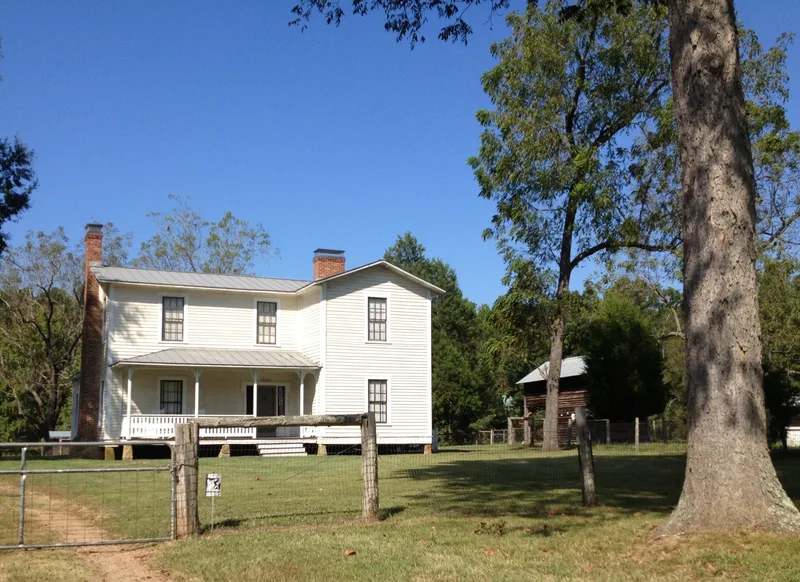
Albert McCoy Farm is a 76-acre rural property in the Long Creek area of northern Mecklenburg County, where the same family has held land since 1770 and farmed it continuously since at least 1880. Its centerpiece is a c. 1886 two-story, side-gable-and-wing house on a stone pier foundation, with weatherboard siding, a standing-seam metal roof and a hip-roofed porch with sawn brackets. Local carpenter John Ellis McAuley built it, leaving handcarved mantels, board-and-batten ceilings and an open-string stair. A log crib, wellhouse, smokehouse and privy survive from the same era, set among pastures, fields, woodland and a 1930s pond. Albert McCoy, a Confederate veteran and a founder of St. Mark's Episcopal Church, raised twelve children here. The farm was recognized for its agricultural history, since its crops and livestock matched county patterns, and for the quality of the house's craftsmanship. It remains a rare, intact farm landscape amid fast-growing suburbs.
Machine-generated summary. This summary was generated by a language model from the official nomination document and has not been reviewed line by line by an editor. It may contain errors. Check the source document before relying on any detail. Source: nomination document (PDF) · catalog entry. Generated October 2026 (model claude-sonnet-5-5, prompt v1.0-2026-10-29).
| Period of significance | c. 1886-1925 |
|---|---|
| Styles | Other: Queen Anne-influenced |
| Areas of significance | Architecture, Agriculture |
| Acreage | 76.4 |
| Boundary source | NPS cultural-resource GIS polygon |
| Full listing page | McCoy, Albert, Farm (property record) |
What listing means for this property
This is a historic district. Buildings within its boundary are either contributing (they add to the district's significance) or non-contributing. Owners of contributing income-producing buildings can claim the 20% federal rehabilitation tax credit; homeowners should look at state credits. National Register districts impose no design review by themselves; a local historic district ordinance, if one exists, does (the difference explained).
General information, not legal or tax advice. Rules change; confirm with your State Historic Preservation Office or a qualified adviser.