Mars Hill College Historic District

Why it's listed
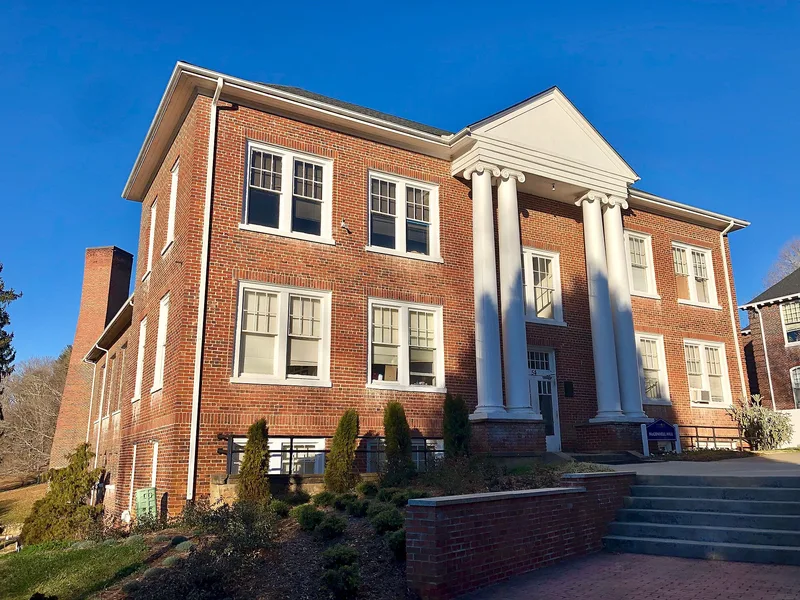
Mars Hill College in Madison County, North Carolina, grew from the French Broad Baptist Institute, which opened in 1856 on a four-acre lot donated by Edward Carter. The campus took its lasting form under President Robert Lee Moore, who led the college from 1897 to 1938 and pushed it toward junior college accreditation in 1926. Moore hired several architects, and from the early 1930s Henry Irven Gaines served as college architect until 1970. Gaines designed six contributing buildings between 1935 and 1955, including three-story Georgian dormitories and the Moderne Wall Science Building completed in 1940. Earlier work includes the rustic stone Montague Building of 1919 and McConnell Gymnasium of 1924. The oldest surviving building is Founders Hall, a late nineteenth-century brick classroom building. The district is important for its record of Baptist-supported higher education and for its architecture across more than half a century.
Machine-generated summary. This summary was generated by a language model from the official nomination document and has not been reviewed line by line by an editor. It may contain errors. Check the source document before relying on any detail. Source: nomination document (PDF) · catalog entry. Generated October 2026 (model claude-haiku-5-5, prompt v1.1-2026-10-29).
| Period of significance | 1856-1955 |
|---|---|
| Styles | Colonial Revival, Bungalow/Craftsman, Classical Revival, Moderne |
| Areas of significance | Architecture, Education |
| Acreage | 27.2 |
| Boundary source | NPS cultural-resource GIS polygon |
| Full listing page | Mars Hill College Historic District (property record) |
What listing means for this property
This is a historic district. Buildings within its boundary are either contributing (they add to the district's significance) or non-contributing. Owners of contributing income-producing buildings can claim the 20% federal rehabilitation tax credit; homeowners should look at state credits. National Register districts impose no design review by themselves; a local historic district ordinance, if one exists, does (the difference explained).
General information, not legal or tax advice. Rules change; confirm with your State Historic Preservation Office or a qualified adviser.