Market Street Mansion District

Why it's listed
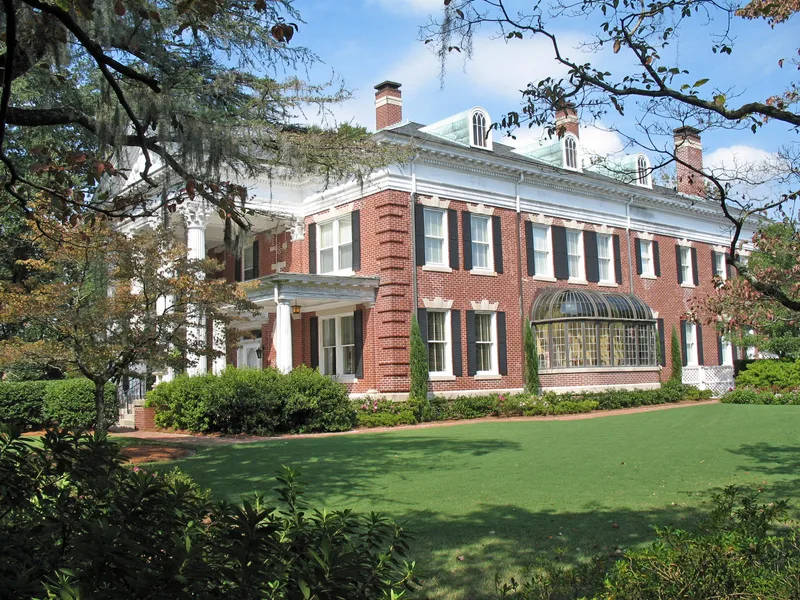
Four large houses on the 1700 block of Market Street in Wilmington form a district of early twentieth century mansions on a tree-shaded avenue lined with live oaks, brick walls and iron fences. The Bridgers-Emerson-Kenan House is a brick Georgian Revival mansion, while the Holt-Wise and Bridgers-Brooks houses are frame Neo-Classical Revival buildings with colossal porticoes. The fourth, the Bluethenhal House, is a brick Georgian Revival home begun in 1917. The houses sit in Carolina Heights and Carolina Place, suburbs developed from about 1908 with water, sewer, gas, electric lines and sidewalks. Mary Bridgers, daughter of the Atlantic Coast Line Railroad president, helped drive the development and began three of the houses. Later owners included railroad executives and the Kenan sisters, heirs of a Flagler fortune, who gave generously to education. The district is valued for its grand architecture, its landscaping and its record of early suburban planning.
Machine-generated summary. This summary was generated by a language model from the official nomination document and has not been reviewed line by line by an editor. It may contain errors. Check the source document before relying on any detail. Source: nomination document (PDF) · catalog entry. Generated October 2026 (model claude-sonnet-5-5, prompt v1.0-2026-10-29).
| Styles | Neo-Classical Revival and Georgian Revival |
|---|---|
| Areas of significance | Community Planning and Development, Landscape Architecture, Architecture |
| Acreage | 10 |
| Boundary source | NPS cultural-resource GIS polygon |
| Full listing page | Market Street Mansion District (property record) |
What listing means for this property
This is a historic district. Buildings within its boundary are either contributing (they add to the district's significance) or non-contributing. Owners of contributing income-producing buildings can claim the 20% federal rehabilitation tax credit; homeowners should look at state credits. National Register districts impose no design review by themselves; a local historic district ordinance, if one exists, does (the difference explained).
General information, not legal or tax advice. Rules change; confirm with your State Historic Preservation Office or a qualified adviser.