Manor and Cottages

Why it's listed
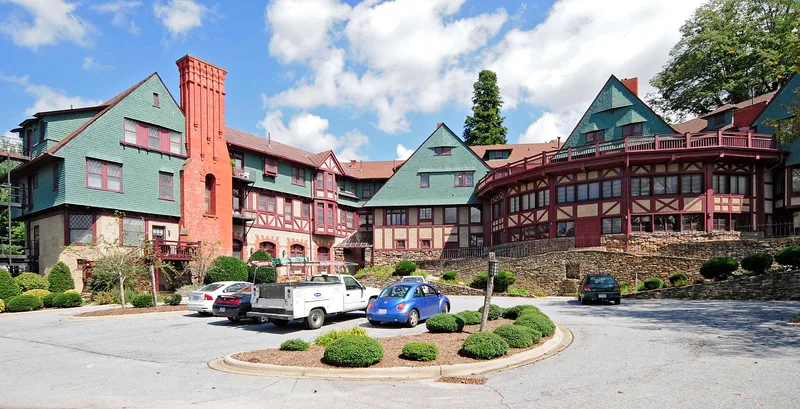
Albemarle Park, on the western slope of Sunset Mountain in Asheville, is a resort district centered on the Manor, an inn conceived by Thomas W. Raoul as an English country house in the mountains. Construction began in 1898, and the inn and two cottages opened on January 1, 1899. A lodge arching over the entrance drive was the first building, and wings were added in 1903 and 1913-1914. Nineteen cottages with individual names, such as Columbus, Clio and Cherokee, were built mainly between 1899 and 1920, and later houses fill out the park. The buildings combine Shingle, Tudor-style and gambrel-roofed Colonial Revival elements. The Manor's interior includes carved woodwork said to be by craftsmen from the Biltmore Estate. The district was listed as a rare surviving example of the picturesque resort developments of the North Carolina mountains. The Manor now operates as a retirement hotel, and most cottages are private residences or apartments.
Machine-generated summary. This summary was generated by a language model from the official nomination document and has not been reviewed line by line by an editor. It may contain errors. Check the source document before relying on any detail. Source: nomination document (PDF) · catalog entry. Generated October 2026 (model claude-sonnet-5-5, prompt v1.0-2026-10-29).
| Period of significance | 1898 to present |
|---|---|
| Styles | Shingle, Tudoresque and Dutch/Colonial Revival (picturesque resort architecture) |
| Areas of significance | Community Planning and Development, Architecture, Social History |
| Acreage | 40 |
| Boundary source | NPS cultural-resource GIS polygon |
| Full listing page | Manor and Cottages (property record) |
What listing means for this property
This is a historic district. Buildings within its boundary are either contributing (they add to the district's significance) or non-contributing. Owners of contributing income-producing buildings can claim the 20% federal rehabilitation tax credit; homeowners should look at state credits. National Register districts impose no design review by themselves; a local historic district ordinance, if one exists, does (the difference explained).
General information, not legal or tax advice. Rules change; confirm with your State Historic Preservation Office or a qualified adviser.