Liberty Row

Why it's listed
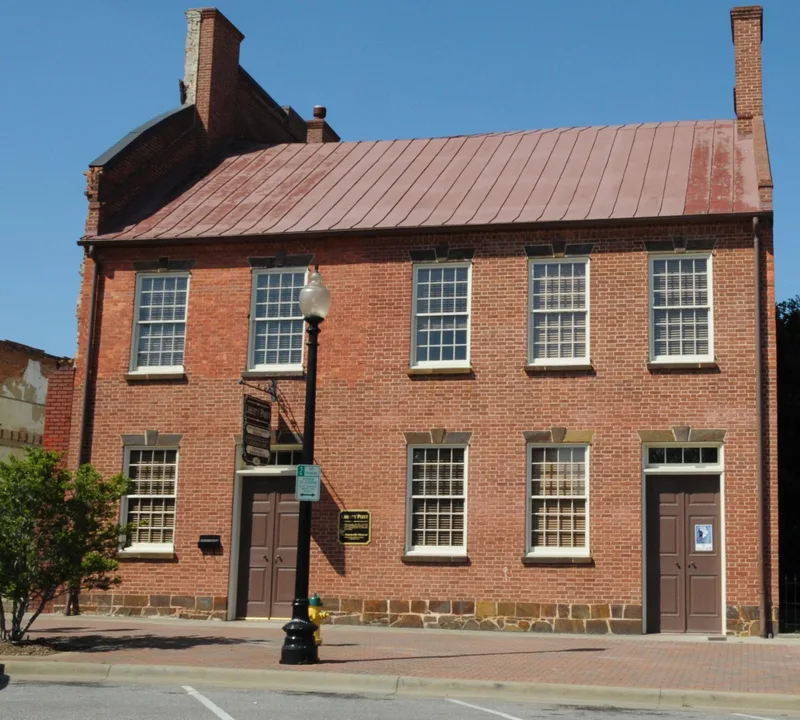
Fourteen brick commercial buildings line the north side of the first block of Person Street in Fayetteville, stretching from Market Square to the triangular Liberty Point. The oldest is the Liberty Point Store, a Federal period building and the oldest known commercial building in the city, though its exact date is uncertain. A row of gabled brick stores followed after the fire of July 1846, with brick parapet walls meant to resist fire. Later Italianate and Romanesque Revival stores were added between 1896 and 1916. The row grew from the merging of Campbelltown and Cross Creek in 1783, when Person Street replaced Bow Street as the center of business. Silversmiths and pewterers once worked here, and the street was nicknamed Robber's Row for its many shops. Liberty Point marks the site where the Liberty Point Resolves were adopted in 1775. The area changed little after the main business district shifted to Hay Street in the early twentieth century.
Machine-generated summary. This summary was generated by a language model from the official nomination document and has not been reviewed line by line by an editor. It may contain errors. Check the source document before relying on any detail. Source: nomination document (PDF) · catalog entry. Generated October 2026 (model claude-sonnet-5-5, prompt v1.0-2026-10-29).
| Styles | Federal, Italianate and Romanesque Revival (vernacular commercial) |
|---|---|
| Areas of significance | Commerce, Politics/Government, Architecture |
| Acreage | 0.9 |
| Boundary source | NPS cultural-resource GIS polygon |
| Full listing page | Liberty Row (property record) |
What listing means for this property
This is a historic district. Buildings within its boundary are either contributing (they add to the district's significance) or non-contributing. Owners of contributing income-producing buildings can claim the 20% federal rehabilitation tax credit; homeowners should look at state credits. National Register districts impose no design review by themselves; a local historic district ordinance, if one exists, does (the difference explained).
General information, not legal or tax advice. Rules change; confirm with your State Historic Preservation Office or a qualified adviser.