Lenoir High School

The National Park Service has not published a boundary polygon for this district; the map shows the listed properties inside it and the district's reference point.
Why it's listed
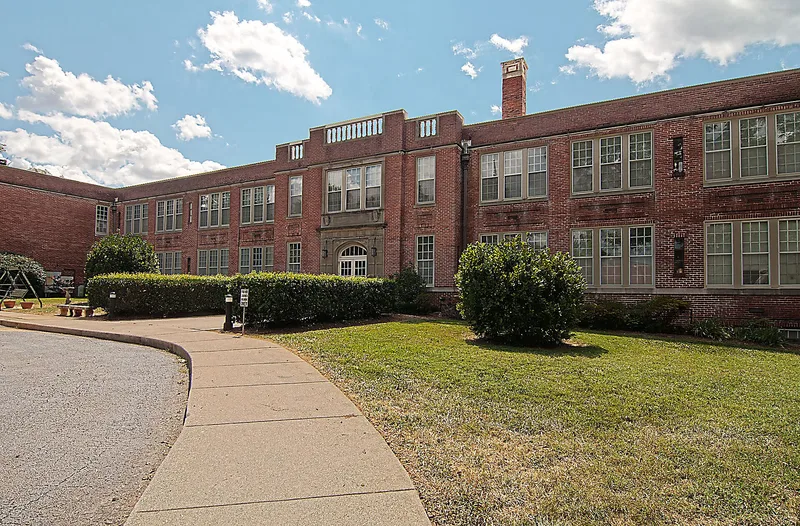
Built in 1922 on a large block in Lenoir, North Carolina, the former high school is a two-story brick building with cast stone trim, designed by Benton & Benton of Wilson and Richmond and constructed by the Joe W. Stout Construction Co. It opened for classes in January 1923. The school is regarded as a fine example of institutional Classical Revival design and of the school modernization that spread through North Carolina in the early twentieth century. Its significance also rests on music: the Lenoir High School Band, formed in 1924 under Captain James C. Harper, became nationally known and ranked in top state competitions for decades. The band building of 1935 to 1937 was designed with acoustics in mind and includes a semicircular rehearsal hall with tiered platforms. The school was used until 1977 and the main building was vacated in 1981.
Machine-generated summary. This summary was generated by a language model from the official nomination document and has not been reviewed line by line by an editor. It may contain errors. Check the source document before relying on any detail. Source: nomination document (PDF) · catalog entry. Generated October 2026 (model claude-haiku-5-5, prompt v1.1-2026-10-29).
| Period of significance | 1922-1940 |
|---|---|
| Styles | Classical Revival |
| Areas of significance | Education, Architecture, Performing Arts |
| Acreage | 6.5 |
| Boundary source | not published |
| Full listing page | Lenoir High School (property record) |
What listing means for this property
This is a historic district. Buildings within its boundary are either contributing (they add to the district's significance) or non-contributing. Owners of contributing income-producing buildings can claim the 20% federal rehabilitation tax credit; homeowners should look at state credits. National Register districts impose no design review by themselves; a local historic district ordinance, if one exists, does (the difference explained).
General information, not legal or tax advice. Rules change; confirm with your State Historic Preservation Office or a qualified adviser.