Lee Avenue Historic District

Why it's listed
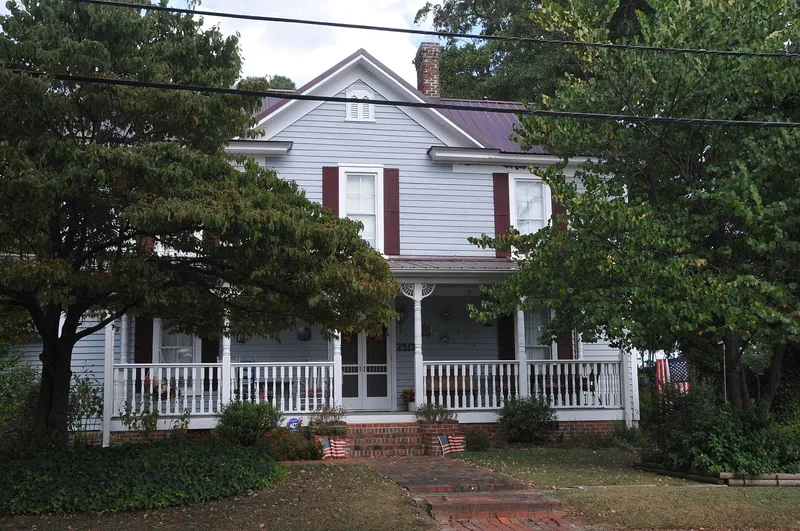
Lee Avenue Historic District is a seven-block, L-shaped neighborhood in the Jonesboro Heights section of south Sanford. It includes stretches of Lee Avenue and West Main Street plus a few lots on South Academy and West Raleigh streets. Of 54 primary buildings, 46 contribute to its character. The oldest is the Pierce-Seawell House, an I-House built about 1882. Other early dwellings date to the 1880s. Most later houses were built from the 1890s to the early 1950s. The most distinctive group is eight pyramidal cottages with flanking side-gabled wings, followed by brick bungalows from the 1920s and 1930s. Two large brick Colonial Revival houses bracket the district, both built by local contractor Leslie P. Cox. The Tenny Inn, a resort hotel that burned in 1921, once occupied part of Lee Avenue. Original porches unify the streetscape. The district was recognized for its architecture and the integrity of its early twentieth-century housing.
Machine-generated summary. This summary was generated by a language model from the official nomination document and has not been reviewed line by line by an editor. It may contain errors. Check the source document before relying on any detail. Source: nomination document (PDF) · catalog entry. Generated October 2026 (model claude-sonnet-5-5, prompt v1.0-2026-10-29).
| Period of significance | ca. 1882-1952 |
|---|---|
| Styles | I-House, pyramidal cottage, Bungalow/Craftsman, Colonial Revival, Queen Anne, gabled ell |
| Areas of significance | Architecture |
| Acreage | 54 |
| Boundary source | NPS cultural-resource GIS polygon |
| Full listing page | Lee Avenue Historic District (property record) |
What listing means for this property
This is a historic district. Buildings within its boundary are either contributing (they add to the district's significance) or non-contributing. Owners of contributing income-producing buildings can claim the 20% federal rehabilitation tax credit; homeowners should look at state credits. National Register districts impose no design review by themselves; a local historic district ordinance, if one exists, does (the difference explained).
General information, not legal or tax advice. Rules change; confirm with your State Historic Preservation Office or a qualified adviser.