Leaksville Commercial Historic District

The National Park Service has not published a boundary polygon for this district; the map shows the listed properties inside it and the district's reference point.
Why it's listed
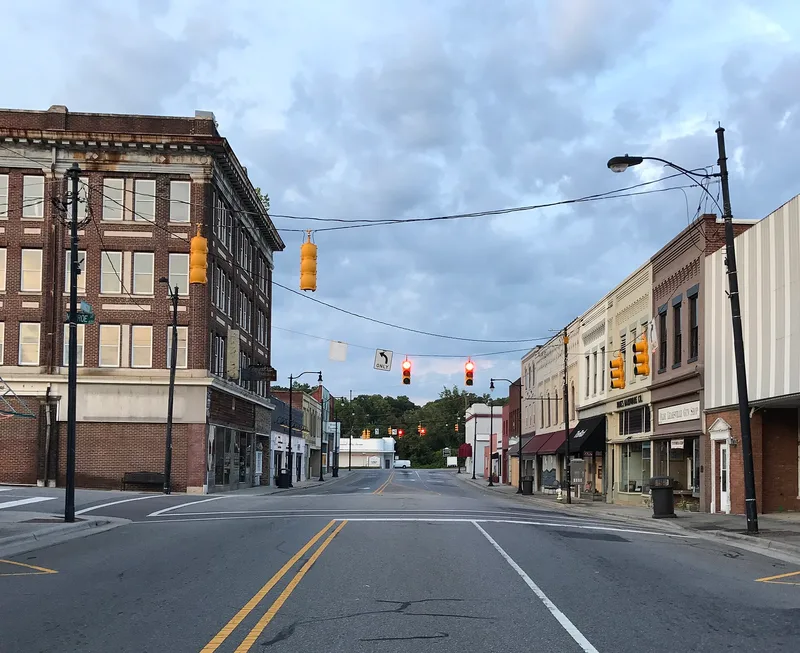
Fifteen commercial buildings and one early residence line a short stretch of Washington Street in Eden, formerly the Leaksville business center. Most were built between about 1885 and 1939, mainly of brick, many with Queen Anne corbelled brickwork, pendants and patterned cornices. The four-story Realty Building of 1924-1925 uses limestone classical detailing and a modillioned cornice, and two Art Moderne buildings from the 1930s show incised windows and smooth white walls. The district also includes a 1939 Colonial Revival post office built by the Federal Works Administration. The Greek Revival Bullard-Ray House, dating from about 1840, is the only residence left in the commercial core. The district's significance rests on its commercial architecture and its link to the railroad and textile boom that followed the arrival of the railroad in 1883.
Machine-generated summary. This summary was generated by a language model from the official nomination document and has not been reviewed line by line by an editor. It may contain errors. Check the source document before relying on any detail. Source: nomination document (PDF) · catalog entry. Generated October 2026 (model claude-haiku-5-5, prompt v1.1-2026-10-29).
| Period of significance | c. 1840-1940 |
|---|---|
| Styles | Neo-Classical Revival, Art Moderne, Colonial Revival, Queen Anne, Greek Revival |
| Areas of significance | Commerce, Architecture |
| Acreage | 3 |
| Boundary source | not published |
| Full listing page | Leaksville Commercial Historic District (property record) |
What listing means for this property
This is a historic district. Buildings within its boundary are either contributing (they add to the district's significance) or non-contributing. Owners of contributing income-producing buildings can claim the 20% federal rehabilitation tax credit; homeowners should look at state credits. National Register districts impose no design review by themselves; a local historic district ordinance, if one exists, does (the difference explained).
General information, not legal or tax advice. Rules change; confirm with your State Historic Preservation Office or a qualified adviser.