Lakeside Mills Historic District

Why it's listed
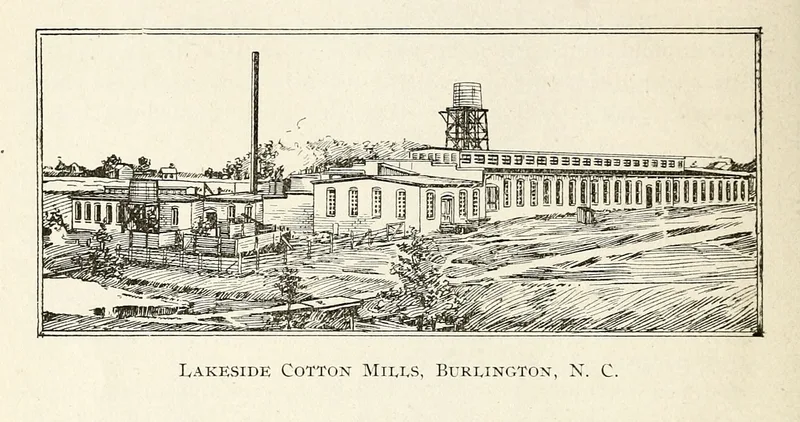
Lakeside Mills is a former cotton mill village on the northern outskirts of Burlington, North Carolina. Built in 1892-93, it includes a long, low brick mill of slow-burn heavy-timber construction with an 85-foot smokestack, several small ancillary buildings, sixteen frame houses and a store. The mill was designed by textile technologist Lafayette Holt for brothers Walter L., Edwin C. and Samuel M. Holt, members of the family that drove Burlington's growth as a textile center. The company made chambray cloth for work shirts and later cheviots and checks. It never expanded much, so few houses were added and the village kept its original layout, green space and semi-rural character. Although many houses have altered porches, siding and chimneys, all retain their original forms. The district is regarded as the least altered of Burlington's late nineteenth-century mill complexes and as an unusually well-preserved example of its type. The mill later served a hosiery company and then as a warehouse.
Machine-generated summary. This summary was generated by a language model from the official nomination document and has not been reviewed line by line by an editor. It may contain errors. Check the source document before relying on any detail. Source: nomination document (PDF) · catalog entry. Generated October 2026 (model claude-sonnet-5-5, prompt v1.0-2026-10-29).
| Period of significance | 1800-1899; 1900- (specific dates 1892-93) |
|---|---|
| Areas of significance | Industry |
| Acreage | 11.5 |
| Boundary source | NPS cultural-resource GIS polygon |
| Full listing page | Lakeside Mills Historic District (property record) |
What listing means for this property
This is a historic district. Buildings within its boundary are either contributing (they add to the district's significance) or non-contributing. Owners of contributing income-producing buildings can claim the 20% federal rehabilitation tax credit; homeowners should look at state credits. National Register districts impose no design review by themselves; a local historic district ordinance, if one exists, does (the difference explained).
General information, not legal or tax advice. Rules change; confirm with your State Historic Preservation Office or a qualified adviser.