Jackson, Jacob, Farm

Why it's listed
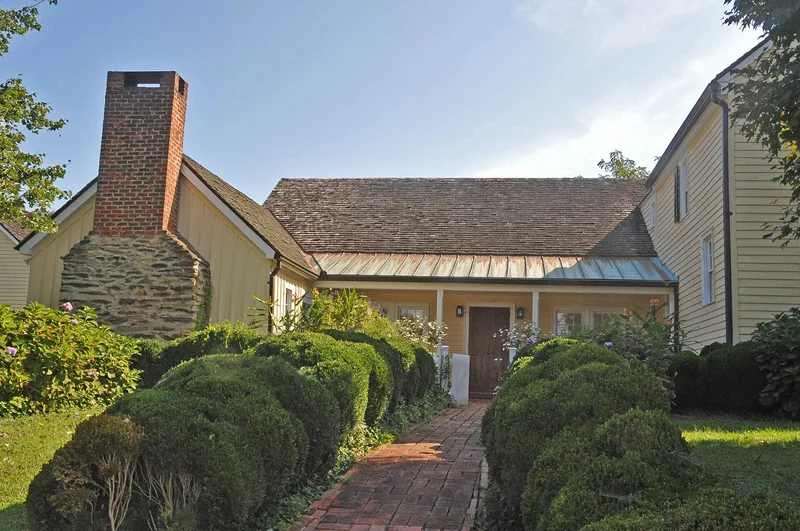
Jacob Jackson Farm, also known as Maple Hill, occupies a hilltop above the Eno River valley northeast of Hillsborough, North Carolina. The 63-acre property includes a rambling H-shaped farmhouse built in stages. A hewn-log cabin from about 1810 was followed by a two-story weatherboarded log Federal house around 1820 and a Greek Revival wing added shortly after 1855. A connector ell came in 1940, and a kitchen and dining block in 1946. Beyond the house stand a log and frame barn, pasture, and second-growth woodland. The farm was listed for two reasons. Its fields, woods, and widely spaced outbuildings preserve the layout of a subsistence and diversified farm from the early nineteenth century into the mid-twentieth. The house also shows how many rural Piedmont dwellings grew over time, with Federal and Greek Revival log construction left largely intact beneath later, careful repairs. Jacob Jackson, a yeoman farmer, is thought to have built the early sections.
Machine-generated summary. This summary was generated by a language model from the official nomination document and has not been reviewed line by line by an editor. It may contain errors. Check the source document before relying on any detail. Source: nomination document (PDF) · catalog entry. Generated October 2026 (model claude-sonnet-5-5, prompt v1.0-2026-10-29).
| Period of significance | ca. 1820-1940 |
|---|---|
| Styles | Federal; Greek Revival |
| Areas of significance | Agriculture, Architecture |
| Acreage | 63.2 |
| Boundary source | NPS cultural-resource GIS polygon |
| Full listing page | Jackson, Jacob, Farm (property record) |
What listing means for this property
This is a historic district. Buildings within its boundary are either contributing (they add to the district's significance) or non-contributing. Owners of contributing income-producing buildings can claim the 20% federal rehabilitation tax credit; homeowners should look at state credits. National Register districts impose no design review by themselves; a local historic district ordinance, if one exists, does (the difference explained).
General information, not legal or tax advice. Rules change; confirm with your State Historic Preservation Office or a qualified adviser.