Hoskins House Historic District

The National Park Service has not published a boundary polygon for this district; the map shows the listed properties inside it and the district's reference point.
Why it's listed
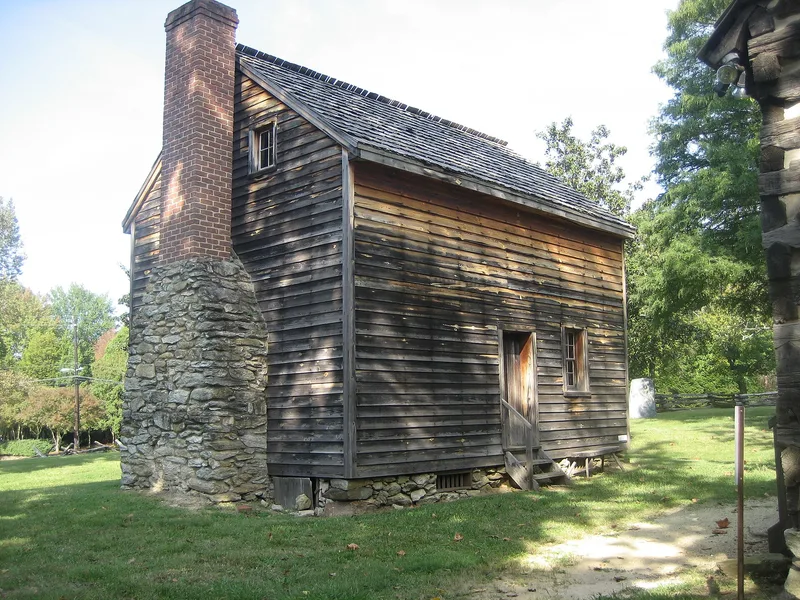
Hoskins House Historic District is a 7.5-acre tract in Greensboro, now surrounded by suburban development, that preserves a log farmstead near the Guilford Courthouse battlefield. Its centerpiece is a hewn-log, single-pen house with a stone chimney, traditionally believed to have stood during the March 15, 1781 battle. A 1787 British map and later study place the center of the British line at this site, and the house may have served as a hospital for wounded British soldiers. Whether the house dates from the battle is uncertain, but it is no later than the early nineteenth century and may be the earliest surviving log house in Guilford County. The ca. 1830 Coble Barn, a double-pen log barn with a cantilevered pent eave, was moved here from southeast Guilford County in 1987. A reconstructed cookhouse and a 1950s brick house are noncontributing. Saved from development in 1984 by a nonprofit group, the property is becoming a city park.
Machine-generated summary. This summary was generated by a language model from the official nomination document and has not been reviewed line by line by an editor. It may contain errors. Check the source document before relying on any detail. Source: nomination document (PDF) · catalog entry. Generated October 2026 (model claude-sonnet-5-5, prompt v1.0-2026-10-29).
| Period of significance | 1781; late 18th-early 19th century; ca. 1830 |
|---|---|
| Styles | Single-pen log house; double-pen log barn |
| Areas of significance | Military, Architecture |
| Acreage | 7.5 |
| Boundary source | not published |
| Full listing page | Hoskins House Historic District (property record) |
What listing means for this property
This is a historic district. Buildings within its boundary are either contributing (they add to the district's significance) or non-contributing. Owners of contributing income-producing buildings can claim the 20% federal rehabilitation tax credit; homeowners should look at state credits. National Register districts impose no design review by themselves; a local historic district ordinance, if one exists, does (the difference explained).
General information, not legal or tax advice. Rules change; confirm with your State Historic Preservation Office or a qualified adviser.