Hopewell Presbyterian Church and Cemetery

Why it's listed
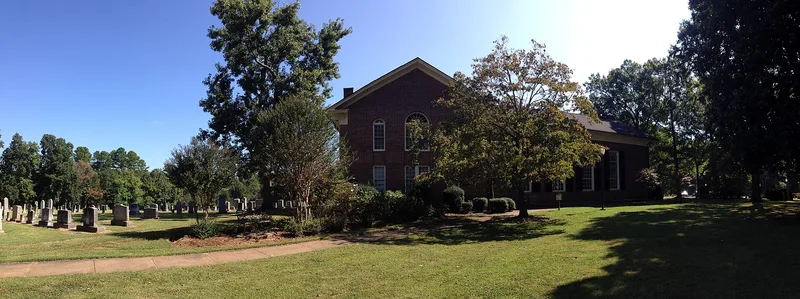
Along Beatties Ford Road in northwest Mecklenburg County stands a brick Presbyterian church whose sanctuary was built in 1833-1835 and remodeled in 1859-1860 in the Greek Revival style. A 1928 two-story Sunday School addition extends across its north end, and a churchyard holds graves dating from 1775 onward. The congregation traces its organization to 1762, and the church was one of only a few brick rural Presbyterian churches in North Carolina built before the 1850s. The cemetery's thirty-six box and chest tombs with ledger tops form what is considered the largest collection of that type in a North Carolina churchyard, and eleven of the ledgers are signed by Charleston stone carvers. Pairs of stone walls built in 1928 and finished in 1931 line the road on both sides of the property. The church is also important for its links to the wealthy plantation families of the Catawba River Valley, including ministers and planters buried in the churchyard.
Machine-generated summary. This summary was generated by a language model from the official nomination document and has not been reviewed line by line by an editor. It may contain errors. Check the source document before relying on any detail. Source: nomination document (PDF) · catalog entry. Generated October 2026 (model claude-haiku-5-5, prompt v1.1-2026-10-29).
| Period of significance | 1775-1931 |
|---|---|
| Styles | Greek Revival; Colonial Revival; Craftsman |
| Areas of significance | Architecture, Social History, Art |
| Acreage | 13.8 |
| Boundary source | NPS cultural-resource GIS polygon |
| Full listing page | Hopewell Presbyterian Church and Cemetery (property record) |
What listing means for this property
This is a historic district. Buildings within its boundary are either contributing (they add to the district's significance) or non-contributing. Owners of contributing income-producing buildings can claim the 20% federal rehabilitation tax credit; homeowners should look at state credits. National Register districts impose no design review by themselves; a local historic district ordinance, if one exists, does (the difference explained).
General information, not legal or tax advice. Rules change; confirm with your State Historic Preservation Office or a qualified adviser.