Hood-Anderson Farm

Why it's listed
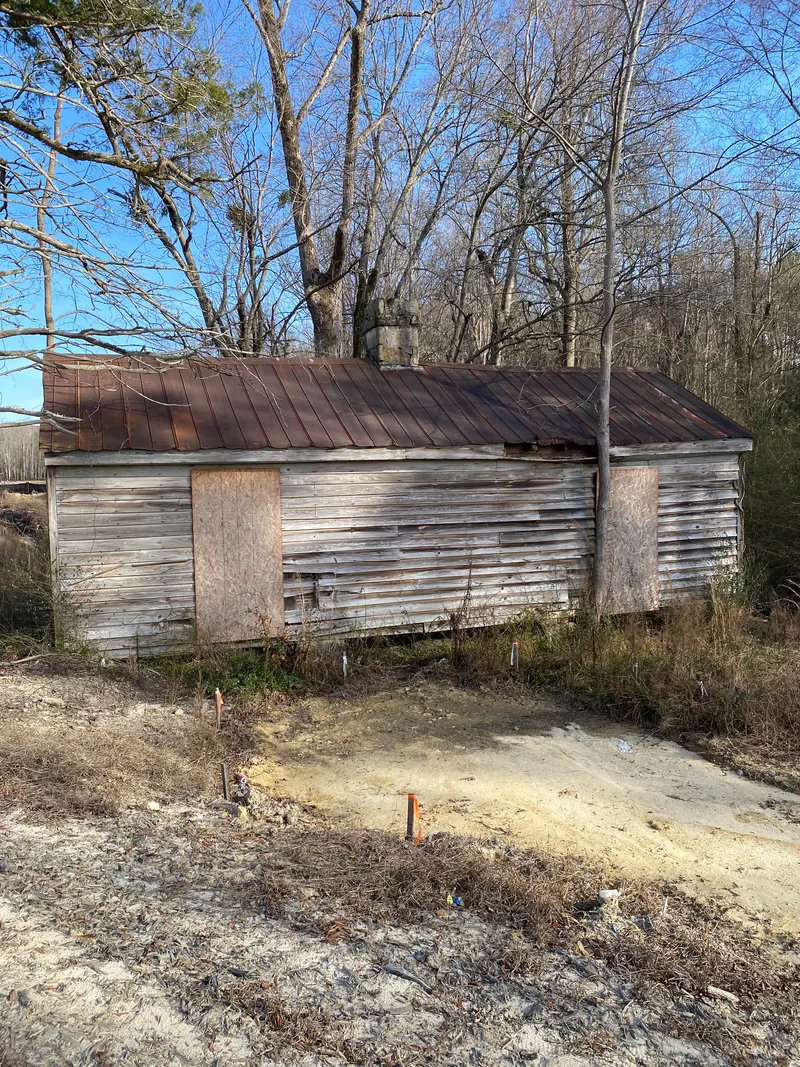
Hood-Anderson Farm occupies 138 acres on both sides of Old Battle Bridge Road near Eagle Rock in eastern Wake County. It is what remains of a 364-acre tract William Henry Hood bought in 1837. The centerpiece is a two-story house of about 1839 that blends Federal and Greek Revival features, with a porch added in 1917. Nearby are an 1854 general store and post office, a one-room dwelling, a two-room tenant or slave house, a 1912 barn, tobacco barns, a smokehouse, garages and a family cemetery. Sites include a cotton gin, a blacksmith shop, a dam on Buffalo Creek and a remnant of the old Tarboro Road. The farm is significant as an unusually complete antebellum agricultural complex. Its buildings and landscape trace the shift from slave-worked cotton to cotton and tobacco farming by the Anderson family, and through the Depression years. The store is noted as the only antebellum store building known to survive in the county, and several sites may yield archaeological information.
Machine-generated summary. This summary was generated by a language model from the official nomination document and has not been reviewed line by line by an editor. It may contain errors. Check the source document before relying on any detail. Source: nomination document (PDF) · catalog entry. Generated October 2026 (model claude-sonnet-5-5, prompt v1.0-2026-10-29).
| Period of significance | ca. 1830s-1948 |
|---|---|
| Styles | Greek Revival |
| Areas of significance | Agriculture, Social History, Architecture, Historic - Aboriginal |
| Acreage | 138 |
| Boundary source | NPS cultural-resource GIS polygon |
| Full listing page | Hood-Anderson Farm (property record) |
What listing means for this property
This is a historic district. Buildings within its boundary are either contributing (they add to the district's significance) or non-contributing. Owners of contributing income-producing buildings can claim the 20% federal rehabilitation tax credit; homeowners should look at state credits. National Register districts impose no design review by themselves; a local historic district ordinance, if one exists, does (the difference explained).
General information, not legal or tax advice. Rules change; confirm with your State Historic Preservation Office or a qualified adviser.