Holloway Street District

Why it's listed
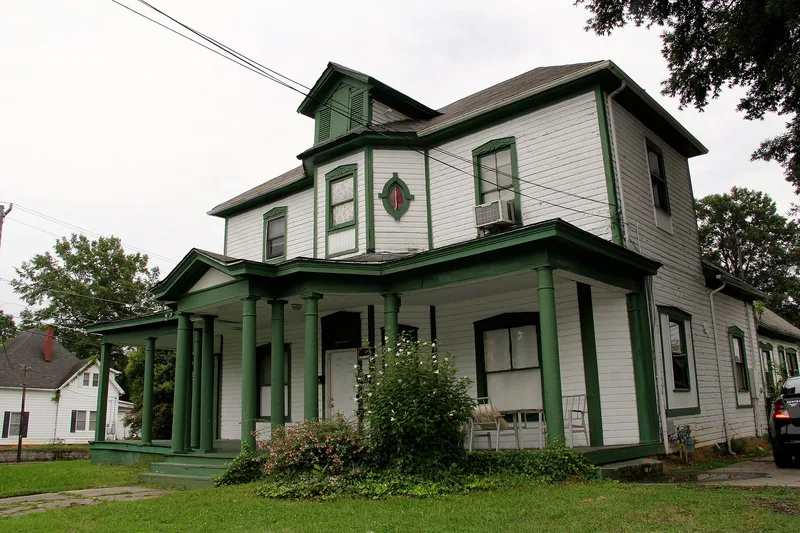
Holloway Street District is a tree-shaded residential area east of downtown Durham, made up of twenty-six buildings along Holloway Street and nearby Dillard Street. Nearly all are one- to two-and-one-half-story frame houses from the 1880s to the 1920s, along with one brick commercial building from the late 1910s. Vernacular Queen Anne houses with irregular rooflines, sawn bargeboard and three-sided bays predominate, mixed with Neoclassical and Colonial Revival designs such as the Thomas House with its curved Ionic portico. The district is one of the few surviving parts of Durham's earliest prestigious neighborhood, which grew in the 1860s and 1870s as the tobacco industry brought wealth to the city. Members of pioneering families sold lots to industrialists, bankers, merchants and professionals who built their homes here. Much of the original neighborhood was lost to commercial growth, urban renewal and road projects. Today the remaining houses are largely intact but deteriorated, and many have been converted to apartments.
Machine-generated summary. This summary was generated by a language model from the official nomination document and has not been reviewed line by line by an editor. It may contain errors. Check the source document before relying on any detail. Source: nomination document (PDF) · catalog entry. Generated October 2026 (model claude-sonnet-5-5, prompt v1.0-2026-10-29).
| Period of significance | 1880s - 1920s |
|---|---|
| Styles | Vernacular Queen Anne, with early Neoclassical Revival and Colonial Revival |
| Areas of significance | Industry, Community Planning and Development, Architecture |
| Acreage | 12 |
| Boundary source | NPS cultural-resource GIS polygon |
| Full listing page | Holloway Street District (property record) |
What listing means for this property
This is a historic district. Buildings within its boundary are either contributing (they add to the district's significance) or non-contributing. Owners of contributing income-producing buildings can claim the 20% federal rehabilitation tax credit; homeowners should look at state credits. National Register districts impose no design review by themselves; a local historic district ordinance, if one exists, does (the difference explained).
General information, not legal or tax advice. Rules change; confirm with your State Historic Preservation Office or a qualified adviser.