Holden-Roberts Farm

Why it's listed
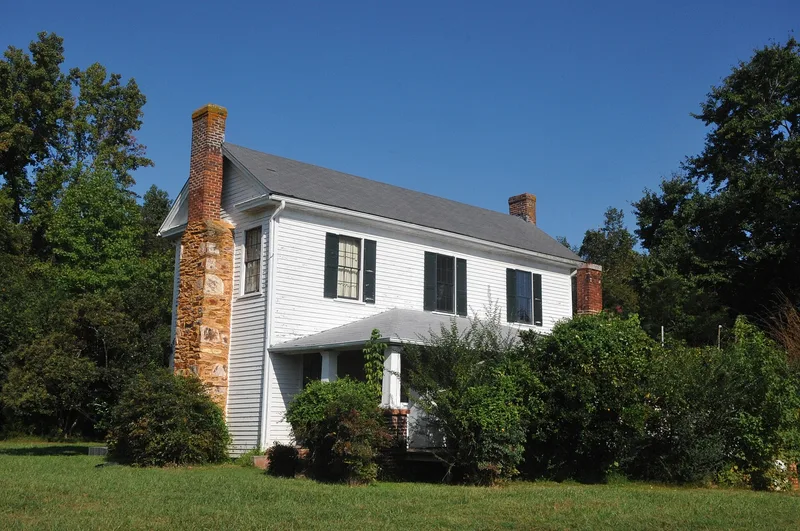
Holden-Roberts Farm lies about three miles east of Hillsborough in Orange County, North Carolina, and covers roughly 68.7 acres of fields and woodland. Its focal point is a frame tri-gable I-house begun in 1873 and finished in 1874 for Addison Holden, half-brother of Reconstruction Governor William Woods Holden. The house has a center hall plan, six-over-six windows, a double-leaf entry, and Greek Revival mantels, with a kitchen-parlor-porch addition from about 1900 and a wing from about 1930. Eight contributing outbuildings date from 1900 to 1950, including frame chicken houses built around 1910 by Cain Roberts, who ran a large chicken and egg operation. The farm is locally significant under Criterion A for diversified and specialized chicken farming in the early twentieth century. The house is significant under Criterion C because it is one of very few Reconstruction-era dwellings in Orange County and retains many original details.
Machine-generated summary. This summary was generated by a language model from the official nomination document and has not been reviewed line by line by an editor. It may contain errors. Check the source document before relying on any detail. Source: nomination document (PDF) · catalog entry. Generated October 2026 (model claude-haiku-5-5, prompt v1.1-2026-10-29).
| Period of significance | 1873-1874 |
|---|---|
| Styles | Tri-gable I-house with modest Greek Revival detailing |
| Areas of significance | Architecture, Agriculture |
| Acreage | 68.7 |
| Boundary source | NPS cultural-resource GIS polygon |
| Full listing page | Holden-Roberts Farm (property record) |
What listing means for this property
This is a historic district. Buildings within its boundary are either contributing (they add to the district's significance) or non-contributing. Owners of contributing income-producing buildings can claim the 20% federal rehabilitation tax credit; homeowners should look at state credits. National Register districts impose no design review by themselves; a local historic district ordinance, if one exists, does (the difference explained).
General information, not legal or tax advice. Rules change; confirm with your State Historic Preservation Office or a qualified adviser.