Hickory Southwest Downtown Historic District

Why it's listed
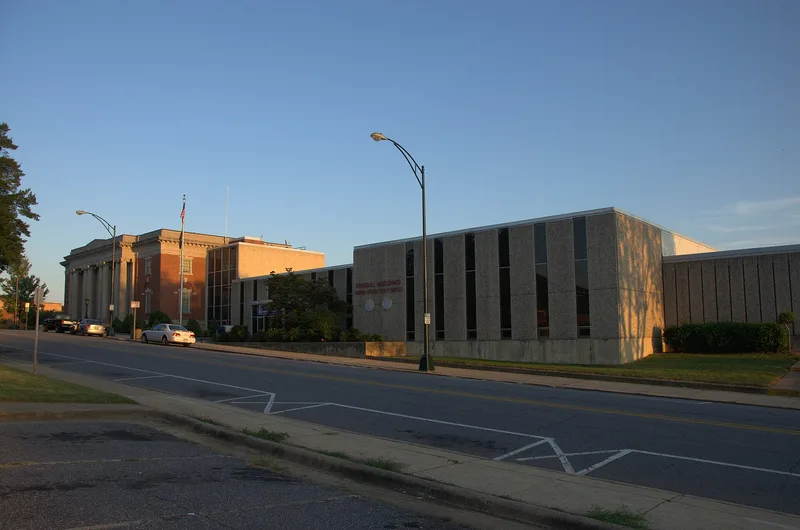
Five city blocks in southwest downtown Hickory, bounded on the north by the Southern Railroad line, make up this district of commercial and governmental buildings built mainly between the 1880s and the 1920s. The Abernathy Livery Stable, begun around 1885, later became the Hickory Bonded Warehouse, and it marks the western edge of the district. The Southern Railroad passenger depot of 1912 is a long brick building with a bellcast hip roof and an octagonal ticket office. The Post Office, finished in 1914 to designs by Oscar Wendworth, is a two-story Classical Revival building with a limestone portico of paired colossal Tuscan columns. The three-story Armory, built in 1911-1912, housed a National Guard cavalry stable and later served as a textile factory and basketball arena. The district reflects the railroad's role in Hickory's development, since the town grew after the line arrived and businesses here served travelers and freight. Its buildings document the town's commercial growth before and after World War I.
Machine-generated summary. This summary was generated by a language model from the official nomination document and has not been reviewed line by line by an editor. It may contain errors. Check the source document before relying on any detail. Source: nomination document (PDF) · catalog entry. Generated October 2026 (model claude-haiku-5-5, prompt v1.1-2026-10-29).
| Period of significance | ca.1885 - ca.1955 |
|---|---|
| Styles | Classical Revival |
| Areas of significance | Commerce, Transportation |
| Acreage | 10 |
| Boundary source | NPS cultural-resource GIS polygon |
| Full listing page | Hickory Southwest Downtown Historic District (property record) |
What listing means for this property
This is a historic district. Buildings within its boundary are either contributing (they add to the district's significance) or non-contributing. Owners of contributing income-producing buildings can claim the 20% federal rehabilitation tax credit; homeowners should look at state credits. National Register districts impose no design review by themselves; a local historic district ordinance, if one exists, does (the difference explained).
General information, not legal or tax advice. Rules change; confirm with your State Historic Preservation Office or a qualified adviser.