Haymount Historic District (Boundary Increase)

Why it's listed
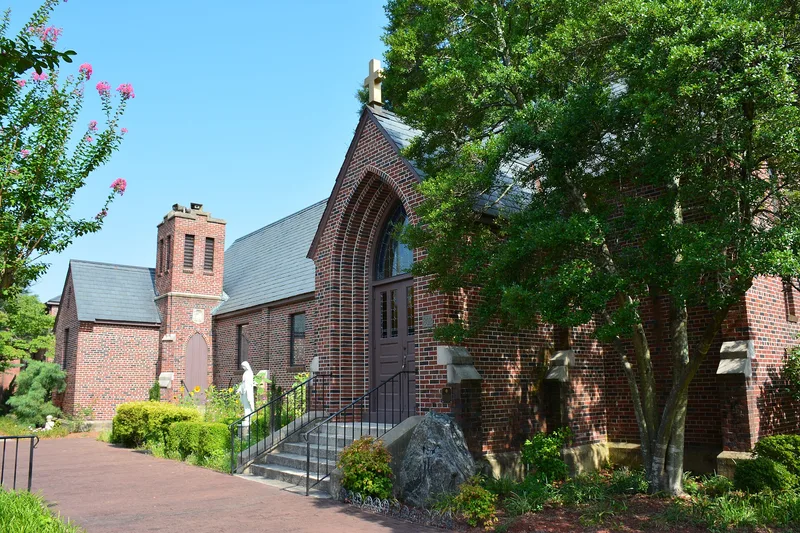
Haymount's Bradford Avenue section holds thirteen buildings dating from about 1847 to 1948, centered on a street that once led into the U.S. Arsenal built in 1838 on Haymount Hill. The arsenal was destroyed by General W. T. Sherman in 1865, and its distinctive brownstone was later reused in walls and yards along the street. The houses include the McGary-Small House, begun about 1847, and the McMillan-Rankin House, built about 1851 and remodeled later in the century. The 1897 E. A. Poe House is a large two-story Queen Anne frame house built by local builder Ruffin Vaughn. Several Colonial Revival houses were built in the 1910s and 1920s for Fayetteville businessmen and professionals. Highsmith Hospital, completed in 1926 to a design by Charles Hartmann of Greensboro, served the city as its only community hospital until about 1960. The district also includes St. Patrick's Catholic Church, completed in 1936, and the twelve-unit Devereux Apartments, built in 1940.
Machine-generated summary. This summary was generated by a language model from the official nomination document and has not been reviewed line by line by an editor. It may contain errors. Check the source document before relying on any detail. Source: nomination document (PDF) · catalog entry. Generated October 2026 (model claude-haiku-5-5, prompt v1.1-2026-10-29).
| Period of significance | ca. 1847-ca. 1957 |
|---|---|
| Styles | Queen Anne; Colonial Revival; Gothic Revival; Beaux Arts modified Spanish Colonial Revival |
| Areas of significance | Architecture, Health/Medicine |
| Acreage | 12 |
| Boundary source | NPS cultural-resource GIS polygon |
| Full listing page | Haymount Historic District (Boundary Increase) (property record) |
What listing means for this property
This is a historic district. Buildings within its boundary are either contributing (they add to the district's significance) or non-contributing. Owners of contributing income-producing buildings can claim the 20% federal rehabilitation tax credit; homeowners should look at state credits. National Register districts impose no design review by themselves; a local historic district ordinance, if one exists, does (the difference explained).
General information, not legal or tax advice. Rules change; confirm with your State Historic Preservation Office or a qualified adviser.