Halifax County Home and Tubercular Hospital

Why it's listed
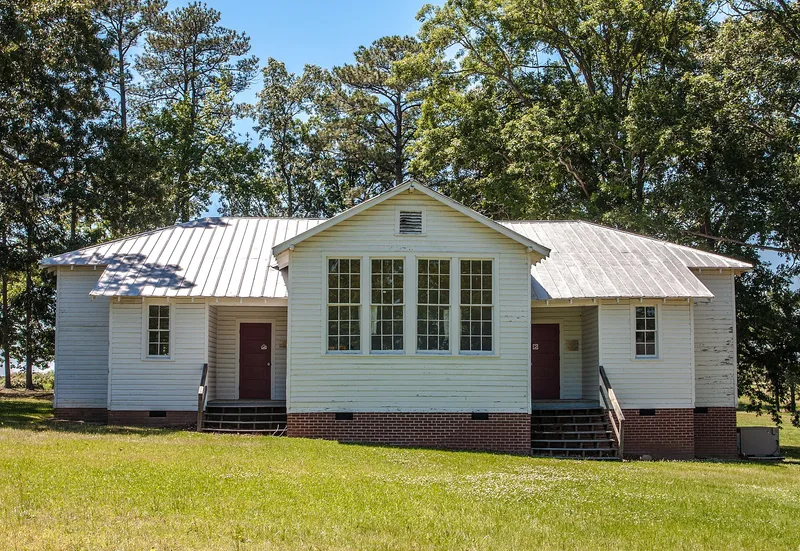
Just west of Halifax, North Carolina, a former county poor farm preserves buildings from two eras of public care for the needy. The site includes the location of the first county home, built around 1845, with its burial ground, plus a brick county home finished in 1923 and a tubercular hospital completed in 1925. Benton and Benton of Wilson designed the home, a two-story central pavilion with a double-tier Tuscan portico and one-story wings linked by sun rooms. E. G. Flanigan of Henderson designed the hospital. Residents were separated by race and gender. Farm buildings such as a smokehouse, potato house, and barns supported a self-sufficient farm worked partly by residents. State welfare officials praised the facilities in 1948. The hospital closed in 1955, and both buildings became rest homes in 1959 before closing in 1973. After years of neglect, the county 4-H program has been reclaiming the complex as a summer camp.
Machine-generated summary. This summary was generated by a language model from the official nomination document and has not been reviewed line by line by an editor. It may contain errors. Check the source document before relying on any detail. Source: nomination document (PDF) · catalog entry. Generated October 2026 (model claude-sonnet-5-5, prompt v1.0-2026-10-29).
| Period of significance | 1800-1899, 1900- (specific dates 1923, 1925) |
|---|---|
| Styles | Classically inspired brick building with Tuscan-column porticoes |
| Areas of significance | Architecture, Social History |
| Acreage | 350 |
| Boundary source | NPS cultural-resource GIS polygon |
| Full listing page | Halifax County Home and Tubercular Hospital (property record) |
What listing means for this property
This is a historic district. Buildings within its boundary are either contributing (they add to the district's significance) or non-contributing. Owners of contributing income-producing buildings can claim the 20% federal rehabilitation tax credit; homeowners should look at state credits. National Register districts impose no design review by themselves; a local historic district ordinance, if one exists, does (the difference explained).
General information, not legal or tax advice. Rules change; confirm with your State Historic Preservation Office or a qualified adviser.