Guastavino, Rafael, Sr., Estate

The National Park Service has not published a boundary polygon for this district; the map shows the listed properties inside it and the district's reference point.
Why it's listed
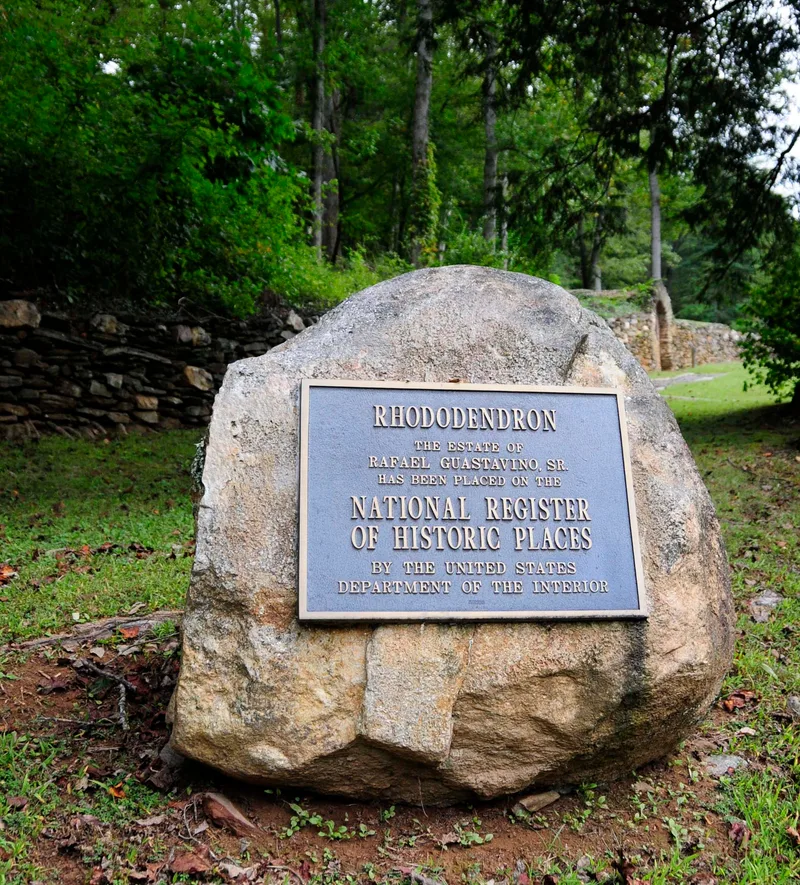
Rhododendron, the Blue Ridge estate of Spanish-born engineer Rafael Guastavino, Sr., sits on about eight acres of grounds now held by Christmount Christian Assembly near Black Mountain in Buncombe County, North Carolina. Guastavino occupied the property from 1895 until his death in 1908. The main house was later razed, but its terraced foundations, a vaulted wine cellar cut into the hillside, a fieldstone retaining wall, and earthworks including two stone-edged ponds and a terrace remain. The most important survival is a beehive kiln ruin and its intact 60-foot brick chimney, used to make the ceramic tiles for Guastavino's patented cohesive construction method, which used thin tile layers in vaults. The site is regarded as significant for its link to his building technology, for his residence there during his most productive years, and for its designed landscape of holly, hemlock and earthworks typical of private estates in the region.
Machine-generated summary. This summary was generated by a language model from the official nomination document and has not been reviewed line by line by an editor. It may contain errors. Check the source document before relying on any detail. Source: nomination document (PDF) · catalog entry. Generated October 2026 (model claude-haiku-5-5, prompt v1.1-2026-10-29).
| Period of significance | 1895-1908 |
|---|---|
| Styles | NO STYLE |
| Areas of significance | Landscape Architecture, Engineering |
| Acreage | 8 |
| Boundary source | not published |
| Full listing page | Guastavino, Rafael, Sr., Estate (property record) |
What listing means for this property
This is a historic district. Buildings within its boundary are either contributing (they add to the district's significance) or non-contributing. Owners of contributing income-producing buildings can claim the 20% federal rehabilitation tax credit; homeowners should look at state credits. National Register districts impose no design review by themselves; a local historic district ordinance, if one exists, does (the difference explained).
General information, not legal or tax advice. Rules change; confirm with your State Historic Preservation Office or a qualified adviser.