Greensboro Senior High School

Why it's listed
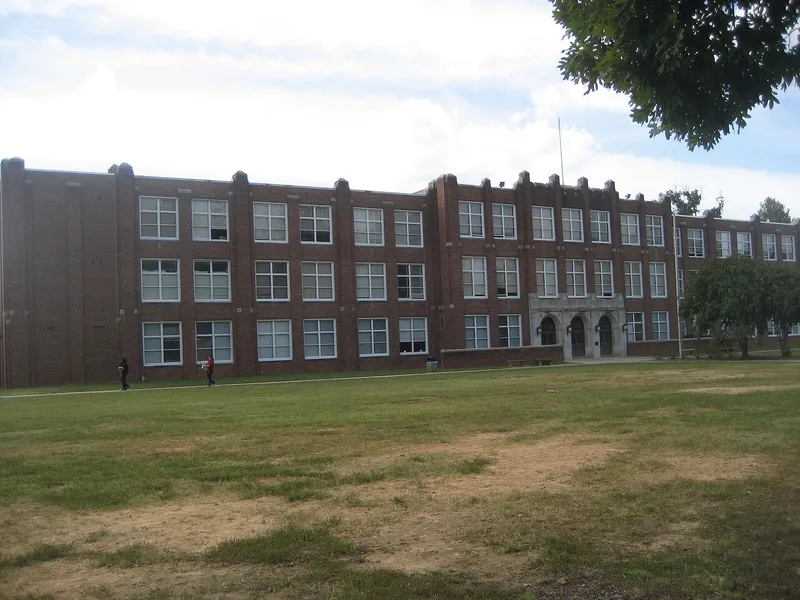
Greensboro Senior High School, also known as Grimsley Senior High School, is a campus of twenty-three buildings and structures on roughly fifty-eight acres off Westover Terrace. The academic buildings are arranged in a semi-circle around a front lawn, with the three-story Main Building at the center. Designed by Charles C. Hartmann and opened in 1929, the Main Building and its companions use red brick, cast stone trim, buttresses and crenellated cornices in a streamlined Gothic Revival manner. Later additions include mid-century modern buildings such as the 1956 Home Economics Building, gymnasiums, a field house, and a stadium completed in 1949. The campus reflects Greensboro's school-building programs of the 1920s, when brick schools replaced modest frame ones, and the school had earlier been a statewide leader in education. It is recognized for its role in local education and for its architecture, with a period of significance from 1929 to 1956. Fifteen resources contribute to its character, and eight, mostly built later, do not.
Machine-generated summary. This summary was generated by a language model from the official nomination document and has not been reviewed line by line by an editor. It may contain errors. Check the source document before relying on any detail. Source: nomination document (PDF) · catalog entry. Generated October 2026 (model claude-sonnet-5-5, prompt v1.0-2026-10-29).
| Period of significance | 1929-1956 |
|---|---|
| Styles | Late 19th and 20th Century Revivals; Modern Movement |
| Areas of significance | Education, Architecture |
| Acreage | 58 |
| Boundary source | NPS cultural-resource GIS polygon |
| Full listing page | Greensboro Senior High School (property record) |
What listing means for this property
This is a historic district. Buildings within its boundary are either contributing (they add to the district's significance) or non-contributing. Owners of contributing income-producing buildings can claim the 20% federal rehabilitation tax credit; homeowners should look at state credits. National Register districts impose no design review by themselves; a local historic district ordinance, if one exists, does (the difference explained).
General information, not legal or tax advice. Rules change; confirm with your State Historic Preservation Office or a qualified adviser.