Ghent Historic District

Why it's listed
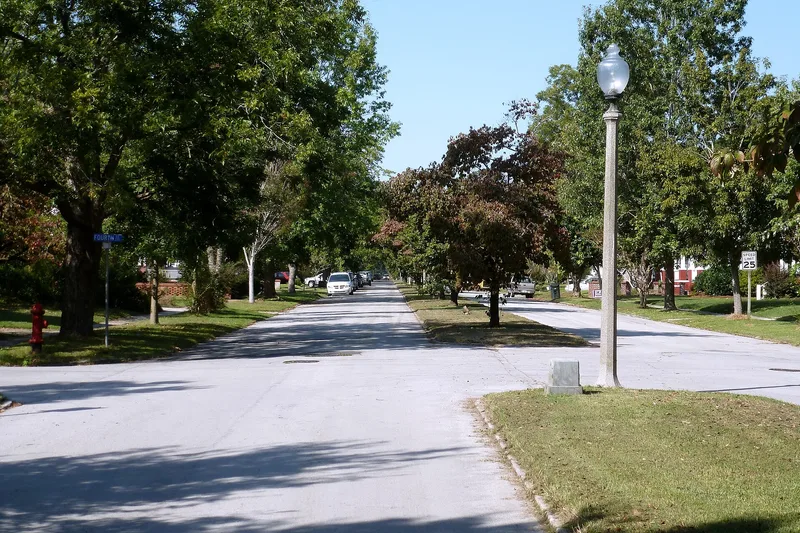
Ghent is a residential neighborhood of about 67 acres roughly one mile southwest of downtown New Bern, developed as a streetcar suburb in the early twentieth century. Its houses sit close to the street on narrow lots along Rhem and Spencer avenues and the north side of Park Avenue. A grassy median down Spencer Avenue marks where the New Bern-Ghent Railway's tracks ran from 1913 to 1929. Of 291 buildings, 203 are houses and 88 are outbuildings, mostly garages, and 191 contribute to the district's character. Construction between 1912 and 1941 produced Colonial Revival and Craftsman houses, American Four-Squares and many bungalows, along with about thirty side-hall-plan houses. The nomination also notes several houses that were probably ordered from Sears, Roebuck catalogues. Later infill includes 1940s frame houses, brick ranch houses and a 1950s Lustron steel house. The district was listed for its cohesive suburban character and the well-crafted work of local builders.
Machine-generated summary. This summary was generated by a language model from the official nomination document and has not been reviewed line by line by an editor. It may contain errors. Check the source document before relying on any detail. Source: nomination document (PDF) · catalog entry. Generated October 2026 (model claude-sonnet-5-5, prompt v1.0-2026-10-29).
| Period of significance | 1912-1941 |
|---|---|
| Styles | Colonial Revival, Bungalow/Craftsman, vernacular side-hall |
| Areas of significance | Community Planning and Development, Architecture |
| Acreage | 67 |
| Boundary source | NPS cultural-resource GIS polygon |
| Full listing page | Ghent Historic District (property record) |
What listing means for this property
This is a historic district. Buildings within its boundary are either contributing (they add to the district's significance) or non-contributing. Owners of contributing income-producing buildings can claim the 20% federal rehabilitation tax credit; homeowners should look at state credits. National Register districts impose no design review by themselves; a local historic district ordinance, if one exists, does (the difference explained).
General information, not legal or tax advice. Rules change; confirm with your State Historic Preservation Office or a qualified adviser.