Garner Farm

Why it's listed
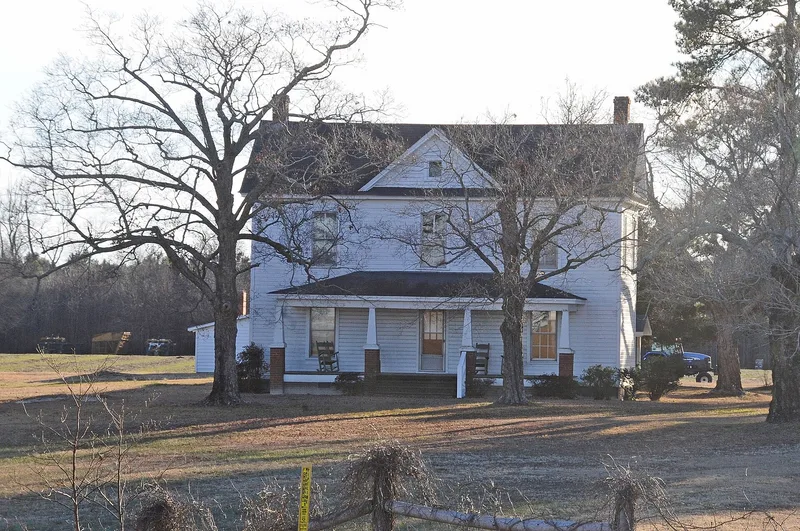
North of Weldon in north Halifax County, the Garner Farm is a 110-acre complex of fields, woodland and farm buildings centered on a frame I-house built about 1901-1902 by local carpenter Jim Johnson for Lonnie Thomas Garner. The two-story house has pedimented gable ends and no first-story windows in its narrow gables. A detached kitchen, moved on site in 1942, and a 1920 pack house survive from the original farmstead, along with a smokehouse, mule and cow barns, and a peanut dryer. The farm was worked by sharecroppers and by members of the Garner family from 1911 onward, and the Garners grew cotton, peanuts, corn and some tobacco during the decades before 1940. Its buildings and field pattern document a typical middle-class farmstead of the period, and few comparable examples remain in the county. The farm is still operated by family members today.
Machine-generated summary. This summary was generated by a language model from the official nomination document and has not been reviewed line by line by an editor. It may contain errors. Check the source document before relying on any detail. Source: nomination document (PDF) · catalog entry. Generated October 2026 (model claude-haiku-5-5, prompt v1.1-2026-10-29).
| Period of significance | 1902-1940 |
|---|---|
| Styles | I-house |
| Areas of significance | Agriculture, Architecture |
| Acreage | 110 |
| Boundary source | NPS cultural-resource GIS polygon |
| Full listing page | Garner Farm (property record) |
What listing means for this property
This is a historic district. Buildings within its boundary are either contributing (they add to the district's significance) or non-contributing. Owners of contributing income-producing buildings can claim the 20% federal rehabilitation tax credit; homeowners should look at state credits. National Register districts impose no design review by themselves; a local historic district ordinance, if one exists, does (the difference explained).
General information, not legal or tax advice. Rules change; confirm with your State Historic Preservation Office or a qualified adviser.