Franklinville Historic District

Why it's listed
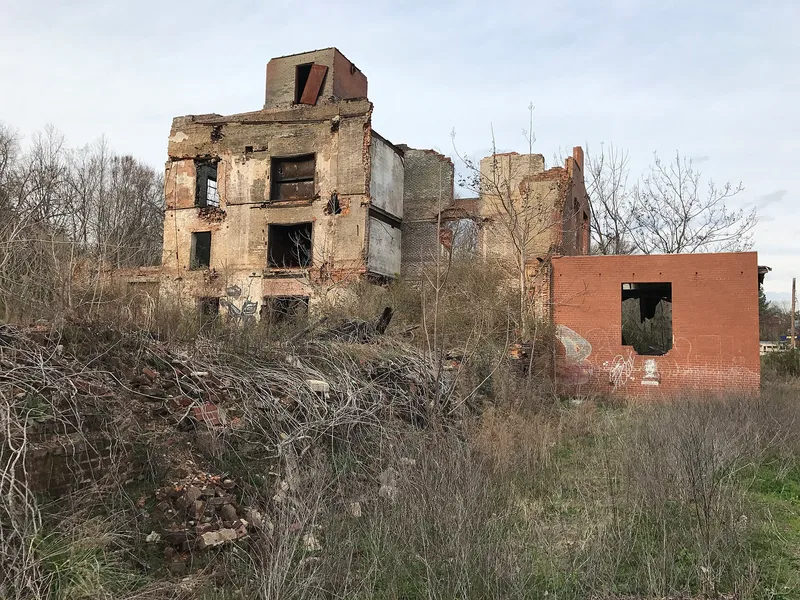
Franklinville is a former mill town on the north bank of Deep River in central Randolph County, North Carolina. It began around a grist and saw mill operating by 1801 and grew after the Franklinsville Manufacturing Company mill opened about 1840 and the Island Ford mill followed in the late 1840s. Brick mills stand at each end of Main Street, and between them are one- and two-story frame houses on spacious lots, with a scattering of brick commercial buildings. The district keeps twenty-two ante bellum structures, including a wing of the Greek Revival Upper mill, one of very few of its kind in the state, and a group of ca. 1838 mill houses regarded as among the most intact in North Carolina. Other landmarks include the 1819 Johnson-Julian House, the brick Coffin-Makepeace House, and Hanks Lodge, the county's first Masonic lodge. Some buildings have been lost, but few intrusions have been introduced, so the town retains its historic layout and character.
Machine-generated summary. This summary was generated by a language model from the official nomination document and has not been reviewed line by line by an editor. It may contain errors. Check the source document before relying on any detail. Source: nomination document (PDF) · catalog entry. Generated October 2026 (model claude-sonnet-5-5, prompt v1.0-2026-10-29).
| Styles | Greek Revival, Georgian-Federal, Italianate, and vernacular mill-village housing |
|---|---|
| Areas of significance | Industry, Historic - Aboriginal, Commerce, Historic - Non-Aboriginal, Architecture |
| Acreage | 208 |
| Boundary source | NPS cultural-resource GIS polygon |
| Full listing page | Franklinville Historic District (property record) |
What listing means for this property
This is a historic district. Buildings within its boundary are either contributing (they add to the district's significance) or non-contributing. Owners of contributing income-producing buildings can claim the 20% federal rehabilitation tax credit; homeowners should look at state credits. National Register districts impose no design review by themselves; a local historic district ordinance, if one exists, does (the difference explained).
General information, not legal or tax advice. Rules change; confirm with your State Historic Preservation Office or a qualified adviser.