Foscue and Simmons Plantations

Why it's listed
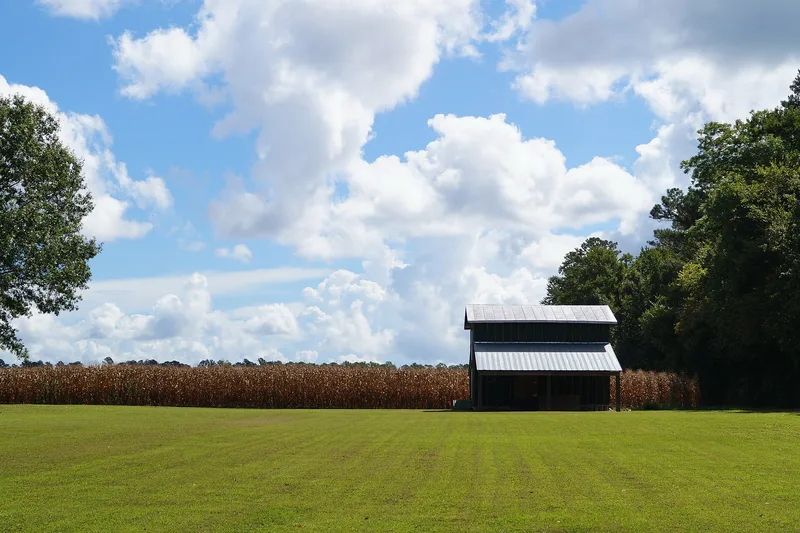
Straddling US 17 near Pollocksville, this 1,353-acre district joins two intermarried families' plantations in Jones County. Simon Foscue, Jr., built the brick plantation house about 1821-1825, facing the New Bern Road. It is a two-story Federal-style dwelling on a side-hall plan, and the only brick house known in the county before the Civil War. About fifty years later, his granddaughter Christiana Foscue Simmons and her husband Amos built a one-story frame cottage across the road. The land runs from the road to the Trent River and includes cemeteries, tobacco barns, marl pits, farm roads and later houses. Woodlands west of the road have long been kept for timber, and woodlands in the east were used for naval stores. Cleared fields have grown corn, peas, soybeans and tobacco through slave, tenant and hired labor. The two plantations were reunited under the Foscue name in 1973, and the holding has stayed within one family for nearly two centuries.
Machine-generated summary. This summary was generated by a language model from the official nomination document and has not been reviewed line by line by an editor. It may contain errors. Check the source document before relying on any detail. Source: nomination document (PDF) · catalog entry. Generated October 2026 (model claude-sonnet-5-5, prompt v1.0-2026-10-29).
| Styles | Federal; Italianate; Bungalow; front-gable barn |
|---|---|
| Areas of significance | Agriculture, Architecture, Social History |
| Acreage | 1379 |
| Boundary source | NPS cultural-resource GIS polygon |
| Full listing page | Foscue and Simmons Plantations (property record) |
What listing means for this property
This is a historic district. Buildings within its boundary are either contributing (they add to the district's significance) or non-contributing. Owners of contributing income-producing buildings can claim the 20% federal rehabilitation tax credit; homeowners should look at state credits. National Register districts impose no design review by themselves; a local historic district ordinance, if one exists, does (the difference explained).
General information, not legal or tax advice. Rules change; confirm with your State Historic Preservation Office or a qualified adviser.