Flat Rock Historic District (Boundary Increase, Decrease and Additional Documentation)
Why it's listed
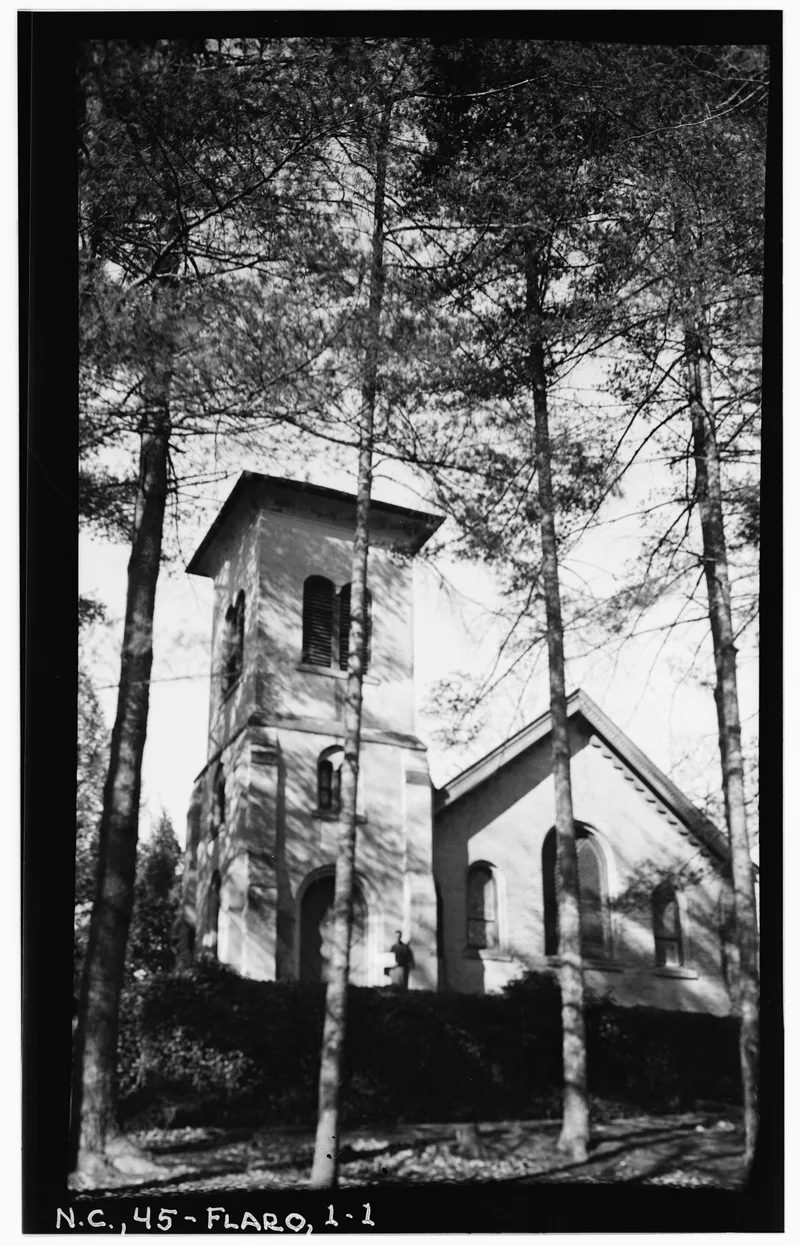
Flat Rock is a mountain community in Henderson County, North Carolina, where wealthy families from Charleston and the low country began building summer houses in the early nineteenth century. The district contains large estates set back from narrow, tree-lined roads, usually approached through stone gates or wooden fences. Its buildings range from Federal and Greek Revival houses to Gothic, Stick-style and Second Empire designs. Saluda Cottages, a large Second Empire house with a three-story tower, is described as the most architecturally ambitious building in the community. St. John-in-the-Wilderness, a brick church with a double hammer beam roof, holds the graves of many early prominent families. Charles Baring, an English banker's son, married Susan Heyward, widow of a Charleston planter, about 1798, and his story illustrates the area's early ties to South Carolina society. The district is significant as a record of the scale and quality of life enjoyed by the affluent of the Carolinas in the nineteenth century.
Machine-generated summary. This summary was generated by a language model from the official nomination document and has not been reviewed line by line by an editor. It may contain errors. Check the source document before relying on any detail. Source: nomination document (PDF). Generated October 2026 (model claude-haiku-5-5, prompt v1.1-2026-10-29).
| Period of significance | 19th century |
|---|---|
| Styles | Federal, Greek Revival, Gothic Revival, Second Empire, Stick-style, Neoclassic Revival, and Tudor Revival elements across the district |
| Areas of significance | Architecture, Entertainment/Recreation |
| Acreage | 4000 |
| Boundary source | NPS cultural-resource GIS polygon |
| Full listing page | Flat Rock Historic District (Boundary Increase, Decrease and Additional Documentation) (property record) |
What listing means for this property
This is a historic district. Buildings within its boundary are either contributing (they add to the district's significance) or non-contributing. Owners of contributing income-producing buildings can claim the 20% federal rehabilitation tax credit; homeowners should look at state credits. National Register districts impose no design review by themselves; a local historic district ordinance, if one exists, does (the difference explained).
General information, not legal or tax advice. Rules change; confirm with your State Historic Preservation Office or a qualified adviser.