Five Points Historic District

The National Park Service has not published a boundary polygon for this district; the map shows the listed properties inside it and the district's reference point.
Why it's listed
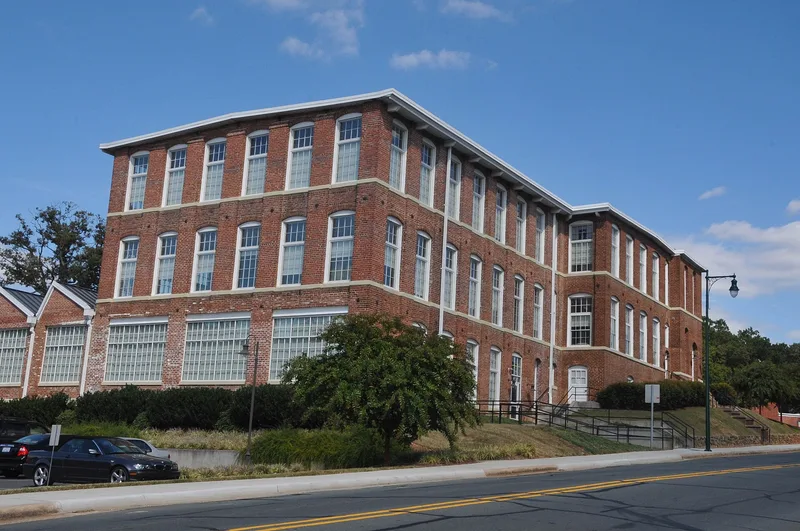
Built along East Main Street and Fourth Street at the low point where a creek was piped underground around 1917, the Five Points district brings together five early-twentieth-century commercial buildings and the Lillian Knitting Mills. The mill was founded by A. L. Patterson in May 1905 and named for his wife, and it was completed late that year by Concord contractor R. A. Brown. It is regarded as Stanly County's best preserved early textile mill, with a design showing Italianate influence. The district's buildings date from 1922 onward and include a granite-block Auten-Wolfe Motor Company building, later the Morgan Motor Company, and a Neoclassical Model Tailoring Company building with Doric capitals. The district is considered significant for documenting how commerce and industry shifted toward automobile-oriented and truck-dependent activity away from the rail lines. Its buildings retain a high degree of integrity, which is why they are valued as Albemarle's only surviving group of their kind.
Machine-generated summary. This summary was generated by a language model from the official nomination document and has not been reviewed line by line by an editor. It may contain errors. Check the source document before relying on any detail. Source: nomination document (PDF) · catalog entry. Generated October 2026 (model claude-haiku-5-5, prompt v1.1-2026-10-29).
| Period of significance | 1905 - ca. 1950 |
|---|---|
| Styles | Commercial Style |
| Areas of significance | Commerce, Industry, Architecture |
| Acreage | 3.4 |
| Boundary source | not published |
| Full listing page | Five Points Historic District (property record) |
What listing means for this property
This is a historic district. Buildings within its boundary are either contributing (they add to the district's significance) or non-contributing. Owners of contributing income-producing buildings can claim the 20% federal rehabilitation tax credit; homeowners should look at state credits. National Register districts impose no design review by themselves; a local historic district ordinance, if one exists, does (the difference explained).
Noted as vacant in the nomination. Nomination documents can be decades old; current status may differ. If you are considering buying an empty listed property, read the due-diligence checklist.
General information, not legal or tax advice. Rules change; confirm with your State Historic Preservation Office or a qualified adviser.