Episcopal Cemetery

The National Park Service has not published a boundary polygon for this district; the map shows the listed properties inside it and the district's reference point.
Why it's listed
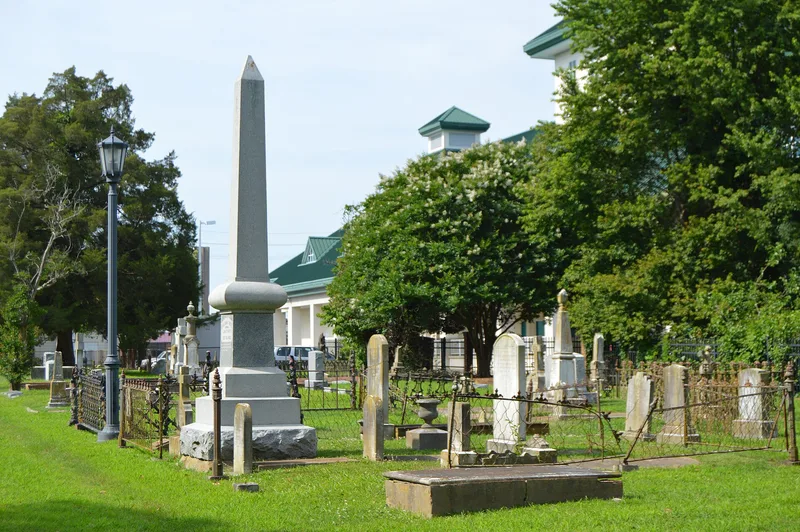
Located south of Elizabeth City's historic center, this cemetery holds roughly 410 gravestones, with the oldest inscription dating to 1724 and the oldest stone original to the site dating to 1825. Its family plots are enclosed by cast iron, wrought iron and wire fences, many installed from the mid-nineteenth century through the 1920s. The nomination regards the cast iron group, including an 1857 enclosure for the Thomas D. Knox plot, as the finest of its kind in eastern North Carolina. Gravestones carry funerary symbols such as weeping willows, draped urns, upturned torches, and Masonic and Odd Fellows emblems, and some were cut by stonecutters working in Norfolk and Baltimore. Among those buried here are physicians, merchants, politicians and Civil War veterans, and the cemetery holds the grave of Governor John Christopher Blucher Ehringhaus, who served from 1933 to 1937. Burials have been rare since 1960, with twenty-one recorded.
Machine-generated summary. This summary was generated by a language model from the official nomination document and has not been reviewed line by line by an editor. It may contain errors. Check the source document before relying on any detail. Source: nomination document (PDF) · catalog entry. Generated October 2026 (model claude-haiku-5-5, prompt v1.1-2026-10-29).
| Period of significance | ca. 1825-1943 |
|---|---|
| Areas of significance | Community Planning and Development, Other, Politics/Government |
| Acreage | 1.5 |
| Boundary source | not published |
| Full listing page | Episcopal Cemetery (property record) |
What listing means for this property
This is a historic district. Buildings within its boundary are either contributing (they add to the district's significance) or non-contributing. Owners of contributing income-producing buildings can claim the 20% federal rehabilitation tax credit; homeowners should look at state credits. National Register districts impose no design review by themselves; a local historic district ordinance, if one exists, does (the difference explained).
General information, not legal or tax advice. Rules change; confirm with your State Historic Preservation Office or a qualified adviser.